

Table of Contents
- What Makes Coffee Beans Low Acid?
- Quick Comparison: Best Low Acid Coffee Beans for Sensitive Stomachs
- 1. Peru Swiss Water Decaf Single Origin Coffee
- 2. Peru Single Origin Coffee
- 3. Colombia Single Origin Coffee
- 4. Brazil Santos Single Origin Coffee
- 5. Papua New Guinea Single Origin Coffee
- 6. House Blend Coffee
- How to Reduce Acidity in Coffee
- How to Store Fresh Roasted Coffee
- Best Brewing Methods for Sensitive Stomachs
- Frequently Asked Questions
Last Updated: September 20, 2026
What Makes Coffee Beans Low Acid?
Low acid coffee is grown, processed, or brewed to reduce the compounds behind stomach irritation, mainly chlorogenic acid and caffeine. Most coffee sits between pH 4.85 and 5.10, which is why it can trigger heartburn, acid reflux, and gastrointestinal distress.
pH Level, Chlorogenic Acid, and N-Methylpyridinium (NMP)
pH level measures acidity on a 0-14 scale, where lower numbers mean more acid. Coffee's pH rarely drops below 4.85, so the gap between "low acid" and "high acid" coffee is smaller than marketing suggests.
Quick Comparison: Best Low Acid Coffee Beans for Sensitive Stomachs
Every option below is a medium roast, which keeps bitterness low while preserving smooth flavor.
| Coffee | Price | Origin | Best For |
|---|---|---|---|
| Peru Swiss Water Decaf | $20.79 | Piura & Amazonas, Peru | Caffeine sensitivity |
| Peru Single Origin | $20.48 | Piura & Amazonas, Peru | Smooth daily cup |
| Colombia Single Origin | $20.48 | Medellín, Antioquia | Bright, balanced flavor |
| Brazil Santos | $20.48 | Paraná & São Paulo | Cocoa-forward smoothness |
| Papua New Guinea | $20.48 | Chimbu Province | Caramel and honey notes |
| House Blend | $22.49 | Central & South America | Everyday value |
1. Peru Swiss Water Decaf Single Origin Coffee
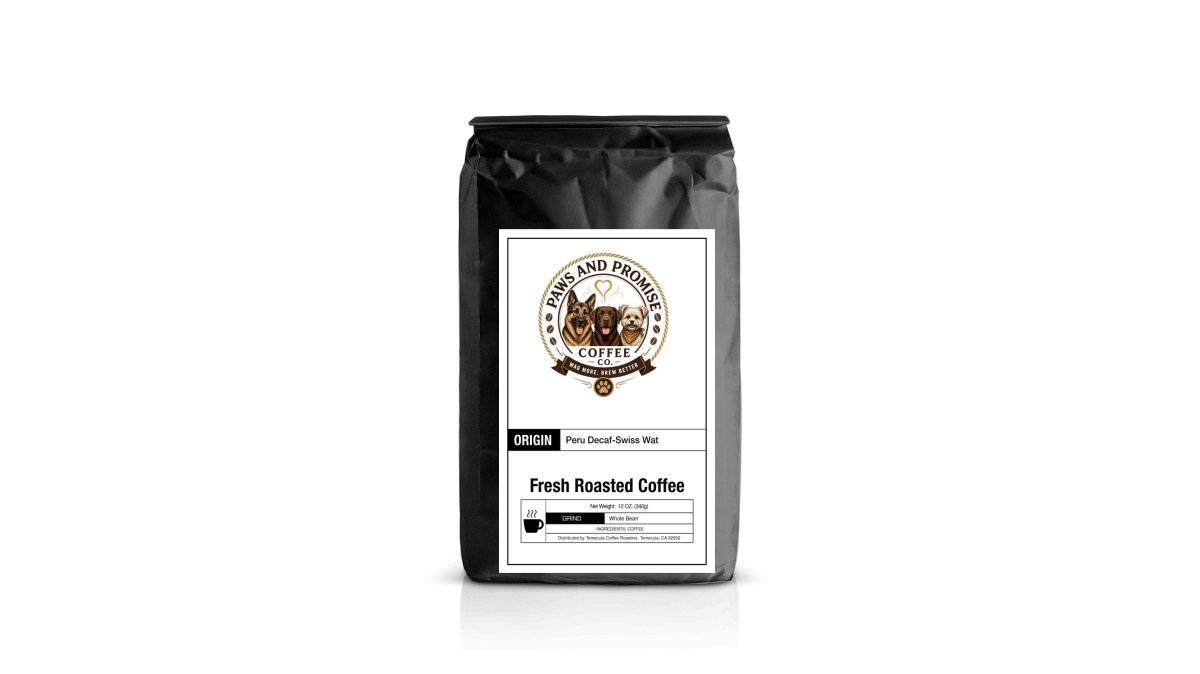
If caffeine sets your stomach off, start here. This Peru decaf comes from the Norandino cooperative and uses the Swiss Water Process, water and carbon filters instead of chemical solvents, which matters for anyone who reacts to residue as much as to acid. The flavor holds up: caramel, smooth body, and a citrus lift, roasted to order in small batches.

Pros and Cons
Pros:
- Chemical-free decaffeination
- Caramel and citrus flavor
- Available in whole bean, drip, espresso, or coarse grind
Cons:
- Costs slightly more than the standard single origins
- Decaf drinkers who want a jolt won't get one
2. Peru Single Origin Coffee
The caffeinated version of the same Norandino coffee, and our pick for a smooth daily cup. Fully washed and sun dried, it lands on salted caramel, silky sweetness, and citrus. Washed processing produces a cleaner, less harsh cup than natural processing, which helps if bitterness bothers your stomach.
Pros and Cons
Pros:
- Clean, washed processing
- Smooth caramel and citrus profile
- Roasted to order in small batches
Cons:
- Still contains caffeine
- Citrus notes won't suit everyone
3. Colombia Single Origin Coffee
Colombia from smallholder farmers around Medellín delivers dried orange, berry, and chocolate in a fully washed, solar-dried bean. It's the most balanced option here, bright enough to stay interesting without the sharp edge that aggravates acid reflux. If you drink coffee black and want complexity, try this one first.
Pros and Cons
Pros:
- Bright but balanced flavor
- Fully washed and solar dried
- Classic single-origin character
Cons:
- Berry notes can read as tart to some palates
- Medium roast only
4. Brazil Santos Single Origin Coffee
Brazil Santos is the smoothest cup here. Pulped natural and sun dried, it brings cocoa, elegant sweetness, and a rounded body with almost no bite. For a stomach that reacts to bitterness, low perceived acidity matters as much as actual pH.

Pros and Cons
Pros:
- Very smooth, cocoa-forward
- Low bitterness
- Great with cream
Cons:
- Less bright than Colombia or Peru
- Mild flavor may bore fans of bold roasts
5. Papua New Guinea Single Origin Coffee
Papua New Guinea from Chimbu Province cooperatives brings caramel, honey, and gentle fruit. Fully washed, sun dried, and grown at 1,350 meters, which slows cherry development and builds sweetness.
Pros and Cons
Pros:
- Distinct caramel and honey sweetness
- High-altitude grown
- Uncommon origin
Cons:
- Limited availability compared to Peru or Colombia
- Gentle fruit note divides tasters
6. House Blend Coffee
House Blend combines Central and South American coffees for nutty, sweet-chocolate, and mild citrus notes. Medium-bodied and consistent, the easiest choice if you want one bag that works every morning.

Pros and Cons
Pros:
- Balanced and consistent
- Smooth, clean finish
- Works black or with cream
Cons:
- Not a single origin
- Fewer grind options than the single origins
How to Reduce Acidity in Coffee
You can meaningfully lower a cup's acid load without switching beans. The levers fall into three buckets, what you brew, how you brew it, and what you add.
Change the bean or roast
- Go darker. Chlorogenic acid, the main acid compound in coffee, degrades as roast temperature and time increase. A dark roast can lose a substantial share of it, which is why dark roasts read as less acidic even when the pH shift is modest.
- Choose a low-acid origin. Beans grown at lower elevations and processed naturally or pulped-natural land smoother than high-grown washed beans. Brazil Santos is a common pick.
- Pick decaf if caffeine is the trigger. Caffeine relaxes the lower esophageal sphincter, the valve that keeps stomach contents down (pubmed.ncbi.nlm.nih.gov). Removing it barely changes pH but removes a mechanical reflux trigger.
Change the brew
- Lower the water temperature. Water just off boil (200-205°F) extracts acid aggressively. Dropping to 185-195°F slows extraction and pulls a gentler cup, the easiest home adjustment.
- Shorten contact time. The longer hot water sits on the grounds, the more acids end up in your cup. A 4-minute French press steep extracts more acid than a 2.5-minute AeroPress push.
- Use a paper filter. Paper traps oils and larger acid-bearing compounds that metal and cloth filters let through, so a paper-filtered pour-over lands smoother than a French press with the same beans.
- Brew cold. Cold brew's low temperature and long steep extract fewer acids overall. The trade-off is time, 12 to 18 hours, and a concentrate you dilute before drinking.
Change what you add
- Milk or cream buffers acid. Dairy contains proteins and calcium that neutralize some of the acid in the cup. A splash can noticeably reduce the burn for many drinkers.
- Skip the sugar and flavored creamers. These don't add acid, but they can trigger their own digestive symptoms, bloating, gas, and reflux, that get blamed on the coffee.
- Try a pinch of salt. A small pinch in the grounds or the cup mutes bitterness perception, which lets you drink a darker, lower-acid roast without reaching for sweetener.
A practical order of operations
- Switch to a darker roast or a low-acid origin.
- Drop brew temperature to 190°F and shorten contact time.
- Move to a paper-filtered method.
- Add a splash of milk if you tolerate dairy.
- Only then consider cold brew, which requires planning ahead.
Most people find steps one through three are enough to drink coffee comfortably again. If symptoms persist after all five, the issue may not be acidity at all, see a clinician before assuming coffee is the culprit.
How to Store Fresh Roasted Coffee
Store beans in an airtight container away from light, heat, and moisture. A cool cupboard beats the fridge, which introduces condensation every time you open the door. Buy smaller bags more often rather than a large bag you can't finish.
Best Brewing Methods for Sensitive Stomachs
Most guides rank brewing methods by reputation. The more useful approach is to rank them by the two variables that actually drive acid in the cup: water temperature and contact time. Acid compounds extract faster at higher temperatures and with longer exposure, so a method that runs cool and fast will land gentler than one that runs hot and slow, even with identical beans.
Cold brew, lowest acid
Cold water (room temperature or below) extracts far fewer acid compounds than hot water over the same period. The catch is that cold water is inefficient, so you compensate with time, typically 12 to 18 hours. The result is a concentrate with a noticeably smoother, less acidic profile. Dilute 1:1 with water or milk before drinking.
Pour-over with a paper filter, low acid, fast
Paper filters trap oils and some of the larger acid-bearing compounds that metal and cloth filters let pass. Combined with a controlled pour and a total brew time around 3 minutes, a paper-filtered pour-over lands smoother than a French press using the same beans and the same water temperature.
AeroPress, low acid, adjustable
AeroPress sits in a sweet spot because you control both temperature and time. A 1.5- to 2.5-minute brew at 175-190°F extracts less acid than a standard drip cycle. The paper microfilter also removes oils, similar to a pour-over.
Drip machine, moderate acid
Standard drip brewers run water at 195-205°F and cycle it through the grounds in 4 to 6 minutes. That's hotter and longer than a pour-over, so more acid ends up in the carafe. A paper filter helps; a reusable metal filter does not.
French press, higher acid
Full immersion at near-boiling temperature for 4 minutes, with a metal mesh filter that lets oils and fine particles through. It makes a rich cup, but it's one of the harsher methods for a sensitive stomach.
Espresso, lower acid per serving
Espresso looks aggressive but extracts in 25-30 seconds, so total acid in the cup is lower than a full mug of drip. The catch is serving size: a single shot is about 1 ounce, so per-ounce acidity is high even though per-serving acidity is modest.
A quick decision guide
- Willing to plan ahead? Cold brew.
- Want a hot cup in under 5 minutes? Paper-filtered pour-over or AeroPress at 185-190°F.
- Want zero effort? Drip machine with a paper filter, and accept moderate acidity.
- Love French press? Try it at 190°F for 3 minutes instead of 4, and pour through a paper filter before drinking.
Water temperature and extraction guidance from the Specialty Coffee Association
Frequently Asked Questions
What makes coffee beans low acid?
Low acid coffee beans are shaped by three main factors: roast level, processing method, and bean origin. Medium and dark roasts contain less chlorogenic acid than light roasts because heat breaks it down. Choosing a medium roast single-origin bean is a reliable starting point for sensitive stomachs.
Does dark roast coffee have less acid than light roast?
Yes. Darker roasts contain less chlorogenic acid because the roasting process breaks it down. However, dark roast is not automatically better for sensitive stomachs. The compound N-methylpyridinium (NMP) increases with roast level and may actually reduce stomach irritation. Medium roasts, like those in Paws and Promise Coffee's single-origin lineup, balance lower acid with smooth flavor and higher NMP than light roasts, making them a smart middle ground.
Are low acid coffee beans better for acid reflux?
Low acid coffee beans can be gentler for people with acid reflux or gastroesophageal reflux disease (GERD), but they are not a cure. Cold brew and medium-roast single-origin beans reduce some of the compounds that trigger symptoms. If you have persistent heartburn or gastritis, talk to a gastroenterologist before relying on any coffee type. Many people find that switching to cold brew made with low acid beans and drinking it after meals, not on an empty stomach, makes a noticeable difference.
Is cold brew coffee naturally lower in acid?
Cold brew is lower in acid than hot-brewed coffee because cold water extracts fewer acidic compounds over the long steeping time. Brewing temperature and extraction time are the key variables: hot water pulls out more chlorogenic acid and tannins, while cold water leaves more behind. For sensitive stomachs, cold brew made with a medium-roast single-origin bean and steeped for 12 to 16 hours is one of the gentlest options.
How can I tell if coffee beans are low acid?
Look for three signals on the label: roast level (medium or dark), processing method (fully washed), and origin (single-origin beans). Beans labeled 'Swiss Water Process' decaf are also lower in acid because the decaffeination method avoids chemical solvents. Paws and Promise Coffee lists roast level, process, and altitude on every bag, so you can compare acidity before you buy.
Finding a coffee that respects your stomach shouldn't mean settling for a bland cup. Paws and Promise Coffee roasts every order fresh, offers single-origin beans, Swiss Water decaf, and a smooth house blend, and gives 10% of every sale to animal rescue and employment programs for adults with intellectual disabilities. Start with the Peru Swiss Water Decaf if caffeine is your trigger, or the Brazil Santos if bitterness is the problem. Add to cart and make your morning cup count.