

Table of Contents
- What Makes Coffee Ethically Sourced
- Fair Trade Coffee Brands and What They Mean
- Ethical Coffee Certifications Explained
- What Is Direct Trade Coffee
- How to Identify and Verify Ethical Coffee Online
- Single-Origin vs. Blended Ethical Coffee
- Buying Options: Whole Beans, Pods, and Subscriptions
- Making Your Purchase Count
- Frequently Asked Questions
Last Updated: September 2, 2026
What Makes Coffee Ethically Sourced
Ethically sourced coffee means beans are grown, harvested, and traded with fair compensation for farmers, environmental stewardship, and community development, the opposite of commodity coffee, where farmers receive rock-bottom prices while middlemen capture most profit.
The core distinction is transparency and accountability. Ethically sourced coffee traces back to specific farmers and their compensation, contrasting sharply with conventional coffee obscured behind layers of brokers and exporters. Small-scale coffee farmers in Central America, East Africa, and Southeast Asia often live below the poverty line despite growing a crop the world depends on. Ethical sourcing fixes this by ensuring living wages, stable contracts, and community investment.
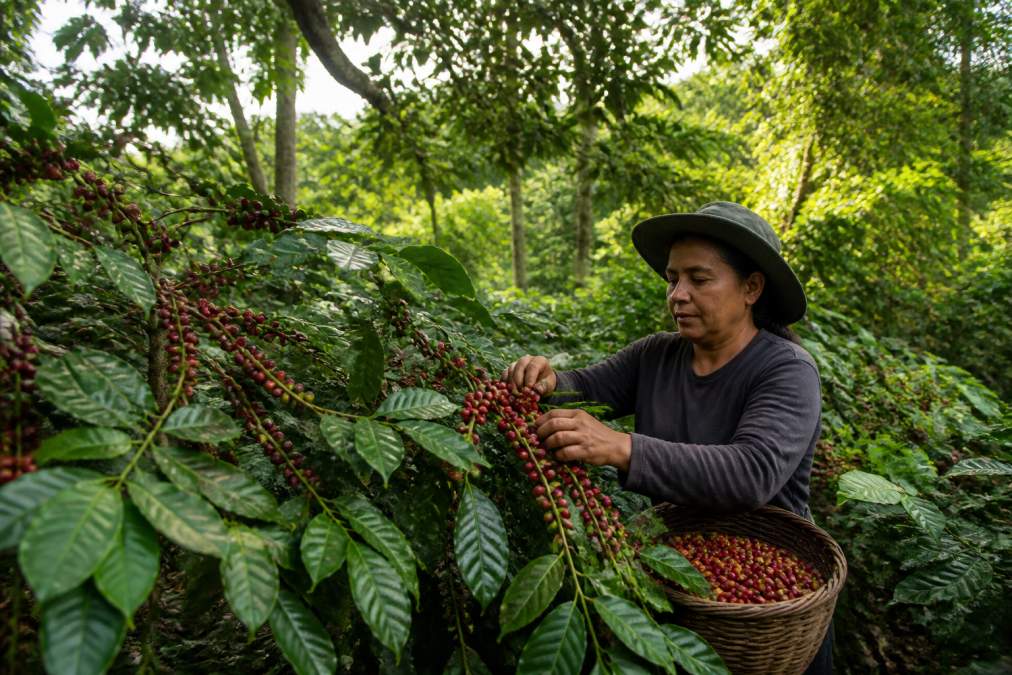
At Paws and Promise Coffee, we prioritize ethically sourced beans because your morning cup should reflect your values. When you choose ethically sourced coffee, you're voting for a system that works for the people who grow it.
Key principles defining ethical sourcing include:
- Direct relationships with farmers: Cutting out middlemen so more money reaches growers
- Environmental stewardship: Supporting shade-grown, pesticide-free farming that preserves biodiversity and soil health
- Fair compensation: Ensuring farmers earn enough to support families and invest in their land
- Community investment: Directing profits toward education, healthcare, and economic opportunity in coffee-growing regions
- Supply chain transparency: Making it possible to verify claims rather than relying on marketing
When farmers are paid fairly, they invest in sustainable practices, stay on their land, and pass knowledge to the next generation.
Fair Trade Coffee Brands and What They Mean
Fair Trade certification guarantees coffee was produced under specific labor and environmental standards, with farmers receiving a minimum price floor. Participating cooperatives and farms must meet standards around worker safety, environmental practices, and community investment.
When you see "Fair Trade Certified" on a bag, it means farmers received at least the Fair Trade minimum price (typically higher than commodity prices), labor standards were verified by third-party auditors, environmental practices met baseline requirements, community development projects were funded, and the supply chain was documented and traceable.
Fair Trade works well for cooperatives and larger farms that can manage certification paperwork. Smaller, remote farms sometimes find the process too burdensome, which is why excellent ethical coffee exists without Fair Trade labels.
Ethical Coffee Certifications Explained
Several certification systems verify ethical practices in coffee farming. Understanding the landscape helps you make informed choices.
Rainforest Alliance focuses on environmental impact, certifying farms that preserve biodiversity, protect water sources, and maintain forest canopy. Rainforest Alliance-certified farms often use shade-grown methods that support bird populations and maintain ecosystem integrity.
Fair for Life combines environmental standards with social accountability, covering labor rights, community development, and fair pricing. It requires documented supply chains and regular audits, making it particularly strong for transparency.
Bird Friendly Certification, operated through the Smithsonian Migratory Bird Center, certifies shade-grown coffee that maintains forest structure. Bird Friendly farms must meet organic standards and maintain specific canopy coverage, creating habitat for migratory birds alongside coffee production.
Organic Certification verifies coffee was grown without synthetic pesticides, herbicides, or fertilizers. While organic doesn't directly address farmer compensation, it supports environmental stewardship and soil health.
Certification systems can be imperfect. They require fees that smaller farms struggle to afford, and audits can miss real-world problems. A coffee without any label but with transparent direct-trade relationships might be more ethical than a certified coffee used purely for marketing.
Rainforest Alliance certification standards provide detailed environmental criteria that go beyond basic sustainability claims.
What Is Direct Trade Coffee
Direct trade is a sourcing model where roasters buy coffee directly from farmers or farmer cooperatives, bypassing traditional export companies and brokers. Farmers negotiate prices and terms directly with roasters they know.
Direct trade coffee typically commands higher prices than Fair Trade because there's no middleman. The roaster and farmer establish ongoing relationships, often visiting farms in person. This creates accountability harder to achieve through third-party certification alone.
The direct trade model works best for specialty coffee roasters with resources to manage direct relationships. Each relationship requires communication, verification, and commitment to buying specific quantities year after year.
With direct trade, you get coffee with documented origin information, often down to the specific farm or cooperative. Labels might read "Direct Trade from the Huila region of Colombia, partnered with the Campoalegre cooperative since 2022." This specificity allows you to research exact farming practices and community impact.
Direct trade doesn't require certification, so you're relying on the roaster's integrity and willingness to verify claims. Established roasters with direct-trade relationships have built their brand on transparency and accountability.
How to Identify and Verify Ethical Coffee Online
Buying ethically sourced coffee online requires reading beyond marketing language and checking for actual verification.
Check for Certifications and Transparency
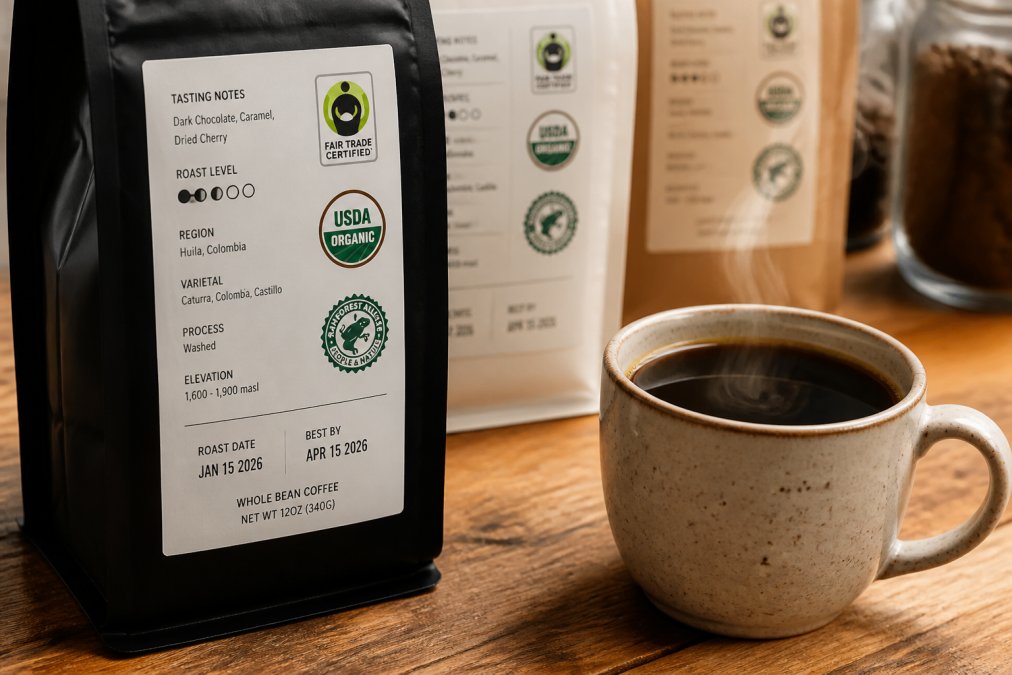
Look for third-party certifications on the product page: Fair Trade, Rainforest Alliance, Fair for Life, organic, and Bird Friendly. If a coffee claims to be ethical but carries no certification, the roaster should provide detailed sourcing information instead.
Real transparency includes the specific farm or cooperative name, region, farmer's name when possible, and how much the farmer was paid. This information should be accessible within 30 seconds of landing on the product page.
Red flags include vague language like "ethically sourced" with no details, claims of "supporting farmers" without specifics, or unknown certifications. If a roaster won't tell you where coffee comes from or how much farmers are paid, shop elsewhere.
Look for Roast Dates and Supply Chain Information
Ethical sourcing pairs with freshness. Coffee roasted to order stays fresher longer. Check the roast date on the bag, it should be recent, ideally within two weeks.
Supply chain transparency means you can trace coffee backward: roaster → exporter → farmer or cooperative. Some roasters publish detailed sourcing reports or stories about their farms. This documentation signals serious commitment to ethics, not just marketing.
Ask yourself: Can I find the farm name, region, and farmer information? Does the roaster explain how much farmers are paid? Is the roast date clearly printed? Are there certifications or sourcing stories? Does the website explain the roaster's sourcing philosophy?
If you answer "yes" to most questions, you're likely looking at genuinely ethical sourcing.
Single-Origin vs. Blended Ethical Coffee
Single-origin coffee comes from one specific farm, region, or country. Blended coffee combines beans from multiple origins. Both can be ethically sourced.
Single-origin coffees let you taste specific characteristics of a place. A single-origin from Ethiopia tastes different from Colombia because of differences in altitude, soil, climate, and processing. You're supporting a specific farm or region and tasting the direct result of their work.
Blended coffees combine origins to create consistent flavor profiles and balance. Blends can be ethical if each origin is responsibly sourced, but you're supporting multiple farms rather than focusing impact on one.
For ethical sourcing: single-origin coffees often have clearer traceability. You know exactly which farm your money supports. Blends require more research because you need to verify sourcing of each component bean.
At Paws and Promise Coffee, we offer both single-origin and blended options, all ethically sourced. Choose single-origin to taste terroir and support specific farmers; choose blends for consistency and to support multiple communities.
Buying Options: Whole Beans, Pods, and Subscriptions
Ethically sourced coffee comes in multiple formats, each with trade-offs between convenience, freshness, and environmental impact.
Whole beans offer the best flavor because you grind them fresh before brewing. They stay fresher longer than pre-ground coffee, and you control grind size for your brewing method. For ethical sourcing, whole beans are ideal because roasters can be transparent about origin and freshness.
Pre-ground coffee is convenient but loses flavor faster. If you choose pre-ground, buy in smaller quantities and use it quickly.
Single-serve pods offer maximum convenience. The trade-off: pods generate significant packaging waste, and it's harder to verify sourcing because origin information is often minimal. If you choose pods, look for roasters using compostable capsules with clearly labeled origin and certifications.
Subscriptions deliver fresh coffee on a schedule you set. Many ethical roasters offer subscriptions that rotate through different single-origin coffees or provide consistent blends. Subscriptions often include discounts and ensure you never run out.
The Daily Brew Starter Pack from Paws and Promise Coffee pairs whole beans with a ceramic mug, letting you start your ethical coffee journey with fresh, roasted-to-order beans.

| Format | Freshness | Convenience | Packaging Waste | Best For |
|---|---|---|---|---|
| Whole beans | Excellent | Requires grinder | Minimal | Flavor-focused coffee lovers |
| Pre-ground | Good | High | Minimal | People without grinders |
| Pods | Good | Very high | Significant | Convenience-first buyers |
| Subscription | Excellent | High | Minimal | Regular drinkers |
Making Your Purchase Count
Buying ethically sourced coffee has real consequences. Your money directly funds farming practices, community development, and environmental stewardship.
Start by choosing one roaster and learning their sourcing story. Read their website, understand which farms they work with, and notice how your palate develops as you drink better coffee. Many ethical roasters publish detailed sourcing information and share photos or videos from their farms.
Consider what ethical sourcing means to you personally. Are you most concerned about farmer compensation? Environmental impact? Community development? Labor rights? Different certifications and sourcing models emphasize different values.
Subscription models make ethical buying easier because you commit upfront and receive fresh coffee regularly. You support the same farms consistently, which helps roasters maintain long-term relationships. This stability benefits farmers more than one-time purchases.
Smithsonian Migratory Bird Center's Bird Friendly certification provides detailed information about shade-grown coffee farming and its environmental benefits.
When you share your coffee choice with others, you're normalizing ethical sourcing. By choosing ethically sourced coffee and talking about why, you influence your community's purchasing decisions.
Buying ethically sourced coffee online means choosing roasters who prioritize transparency, farmer compensation, and environmental stewardship. It means reading sourcing stories, checking certifications, and understanding that your money funds real people and real communities.
At Paws and Promise Coffee, we've built our entire business around this principle. Every bag of ethically sourced coffee we roast to order supports Forever Paws Animal Shelter and Sweet Inspirations' employment programs for adults with intellectual disabilities. When you buy from us, you're not just getting exceptional coffee, you're funding rescue animals and meaningful work in our community.
Fair Trade certification standards and pricing explain exactly how Fair Trade works and what farmers receive.
Start with The Daily Brew Starter Pack, fresh-roasted coffee paired with a ceramic mug, with free shipping on the mug included. Every purchase supports both ethical sourcing and local causes you care about. Get started today and taste the difference that ethical sourcing actually makes.
Frequently Asked Questions
What certifications should I look for when buying ethically sourced coffee?
Look for Fair Trade Certified, Rainforest Alliance, Bird Friendly, or Fair for Life certifications. These verify that coffee was sourced from farms meeting environmental stewardship and fair labor standards. Direct trade coffee, while not formally certified, offers traceability through direct relationships between roasters and small-scale farmers. Check the bag for certification logos and visit the roaster's website to confirm their sourcing practices and supply chain transparency.
How does direct trade differ from Fair Trade coffee?
Direct trade eliminates middlemen by connecting roasters directly with small-scale farmers, typically offering higher prices and direct relationships. Fair Trade is a certification system that ensures minimum prices and labor standards across larger supply chains. Direct trade emphasizes transparency and relationship-building, while Fair Trade provides standardized, third-party verification. Both support farmers and environmental stewardship, but direct trade offers more personalized traceability and often higher farmer compensation.
How can I verify if a coffee brand is truly ethical and not greenwashing?
Request specific information: ask for roaster transparency reports, farmer names or farm locations, and certification details. Check if they publish pricing breakdowns showing how much goes to farmers versus shipping and operations. Look for roast dates on bags, fresh roasting indicates active sourcing. Visit their website for supply chain documentation and third-party certifications. Brands committed to ethical sourcing openly share these details; vague claims about 'sustainable' or 'responsible' sourcing without specifics are red flags.
Does organic coffee automatically mean it's ethically sourced?
No. Organic certification means the coffee was grown without synthetic pesticides, which supports soil health and biodiversity, but it doesn't guarantee fair wages, living conditions for farmers, or environmental stewardship beyond pesticide use. Ethical sourcing requires fair compensation, community development, and supply chain transparency. Look for coffee that combines organic farming with fair trade or direct trade certification for comprehensive ethical sourcing.
This article was written using GrandRanker