

Table of Contents
- The Fresh Roasted Coffee Freshness Window: What You Need to Know
- How Long Does Fresh Roasted Coffee Stay Fresh?
- The Coffee Degassing Process and Why Rest Matters
- How to Store Fresh Roasted Coffee for Maximum Flavor
- Finding Your Coffee Peak Flavor Window by Roast Level
- Signs Your Coffee Has Gone Stale
- Conclusion: Taste the Difference with Roasted-to-Order Coffee
- Frequently Asked Questions
Last Updated: September 4, 2026
The Fresh Roasted Coffee Freshness Window: What You Need to Know
The fresh roasted coffee freshness window describes the period when beans taste their best, typically beginning a few days after roasting and lasting for several weeks. Beans straight out of the roaster need time to settle before they hit their peak. At Paws and Promise Coffee, we roast to order and ship immediately, so every bag arrives inside that optimal window.
Coffee is a perishable agricultural product. Once roasted, chemical changes begin immediately, and the flavors you love are volatile compounds escaping into the air.
How Long Does Fresh Roasted Coffee Stay Fresh?
Fresh roasted coffee stays at peak flavor for roughly 2 to 4 weeks after the roast date, provided it is stored properly in an airtight container away from light, heat, and moisture (peer-reviewed research). This explains why bagged coffee from grocery stores, which may sit on shelves for months, rarely delivers the flavor profile printed on the label.
The countdown starts at the roast date, not the purchase date. If you buy beans without a roast date on the packaging, you have no way to know how much of the freshness timeline has already elapsed. Specialty roasters print this date because they understand that the Specialty Coffee Association's guidance on freshness emphasizes consuming beans within weeks of roasting for optimal extraction and flavor clarity.
The freshness timeline typically unfolds as follows:
- Days 1 to 3: Beans are still degassing heavily. The flavor is bright but slightly uneven, and espresso shots may channel unpredictably.
- Days 4 to 14: The peak flavor window for most roasts. Carbon dioxide has stabilized, flavors have integrated, and extraction is predictable.
- Days 15 to 21: Flavor declines gradually. You will notice less aroma and a flatter cup, though the coffee remains drinkable.
- Days 22 to 30: Staling accelerates. Oxidation and moisture exposure dull acidity and body noticeably.
- Beyond 30 days: The beans are stale. Grinding releases little aroma, and the cup tastes flat or papery.
The Coffee Degassing Process and Why Rest Matters
The coffee degassing process is the release of carbon dioxide (CO₂) that beans accumulate during roasting. Heat drives chemical reactions that produce up to 10 to 12 grams of CO₂ per kilogram of green coffee. Roughly 40 percent exits within the first 24 hours, but the emission curve tapers gradually, with measurable amounts still releasing 10 to 14 days later.
Dissolved CO₂ directly interferes with extraction. Trapped gas forces water to flow around gas pockets rather than through coffee solids, leading to under-extraction. In espresso, escaping gas creates micro-channels through the puck, producing sour, thin, and uneven shots.
Why the Rest Period Varies by Roast Level
The degassing curve shifts based on roast development. Dark roasts have a more porous structure, so gas escapes faster and they often peak as early as day 3 to 5. Light roasts trap CO₂ longer, tasting grassy and hollow for the first several days before opening up between days 7 and 14.
A light-roasted Ethiopian natural may need 10 to 14 days of rest before its fruit-forward notes become clear, while a dark-roasted Brazilian blend may peak at day 4 and decline by day 12. Brew both on day 3, and the dark roast tastes smoother while the light roast tastes muted; by day 12, the opposite is true.
Processing Method Changes the Curve
Processing method also alters degassing. Natural or dry-processed coffees produce a denser bean that degases slightly slower than washed coffees of the same roast level; honey-processed coffees fall in between. Plan for a longer rest with a natural-processed light roast.
The Bloom as a Diagnostic Tool
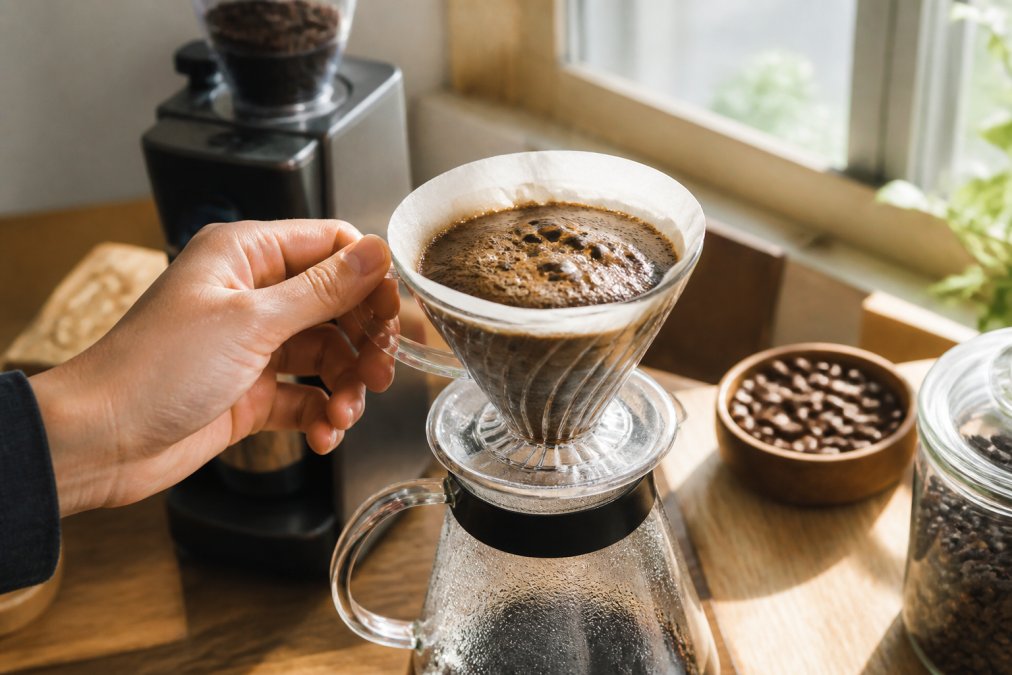
The bloom is a measurable indicator of remaining CO₂. A vigorous bloom that swells to double the bed height suggests active degassing; a modest bloom on day 10 is normal. No bloom means the beans have released nearly all their CO₂, which correlates with flavor loss.
Brewing beans only 1 to 2 days off roast produces an explosive, uneven bloom that creates channels. Extending the bloom to 45 seconds with a gentle spiral pour can help, but it cannot fully compensate for inadequate rest.
Espresso-Specific Rest Requirements
Espresso is the most demanding brewing method for degassing. Beans used too early produce shots that blond quickly, lack crema stability, and taste sour. Most baristas recommend a minimum rest of 5 to 7 days, with 7 to 10 days being the sweet spot for many blends; some single-origin light roasts may need 12 to 14 days.
Understanding degassing as a variable curve, not a fixed countdown, separates a good cup from a great one. The same bean tastes different on day 3 versus day 10, and that difference is about timing, not quality.
How to Store Fresh Roasted Coffee for Maximum Flavor
Knowing how to store fresh roasted coffee is the difference between enjoying week three and pouring it down the sink at day ten. The enemies are oxygen, moisture, heat, and light, each accelerating staling through oxidation and the breakdown of aromatic compounds.
An airtight container is the first line of defense. The one-way valve bags roasters use let carbon dioxide escape without letting oxygen in, so transferring beans to a fully sealed jar is a mistake if they are still off-gassing; pressure buildup can force aroma compounds out or cause the container to bulge.
Keep beans whole until you are ready to brew. Ground coffee has dramatically more surface area exposed to oxygen, and research on coffee storage from the University of California, Davis confirms that whole beans retain volatile compounds significantly longer than pre-ground coffee. Grind only what you need for each brew.
Storage conditions matter as much as the container:
- Store beans in a cool, dark cabinet, never on the counter in direct sunlight
- Keep them away from the stove or any heat source
- Avoid the refrigerator, where moisture and odors contaminate beans
- Do not freeze beans you plan to use within three weeks, since condensation damages cell structure
Finding Your Coffee Peak Flavor Window by Roast Level
Your coffee peak flavor window shifts depending on roast level. Dark roasts are ready sooner but fade faster, while light roasts need more rest and hold their character longer.
Dark roasts degas more quickly due to a more porous bean structure. They often taste best starting around day 3 to 5 and decline noticeably after the second week. Their bold, smoky notes are less delicate, so staling is less obvious until well advanced.
Medium roasts hit their stride between days 4 and 10 and hold reasonably well through day 21, offering enough acidity to stay interesting and enough body to remain satisfying.
Light roasts are the slowest to develop, tasting grassy and hollow in the first few days before opening up dramatically between days 7 and 14. Because they preserve more origin character, delicate notes like florals or citrus hold up for up to four weeks when stored properly.
| Roast Level | Rest Period | Peak Window | Total Freshness |
|---|---|---|---|
| Dark | 3 to 5 days | Days 5 to 14 | Up to 3 weeks |
| Medium | 4 to 7 days | Days 7 to 21 | Up to 4 weeks |
| Light | 7 to 10 days | Days 10 to 28 | Up to 5 weeks |
For espresso drinkers, the window narrows. Beans need to be fully rested but not yet fading. Most espresso blends, including omni roasts that work for both espresso and filter, perform best between days 7 and 18.
Signs Your Coffee Has Gone Stale
Stale coffee announces itself with an absence. The flavors that made the coffee interesting simply stop showing up. Below is a practical testing protocol you can run in under two minutes.
Step 1: The Grind Aroma Test
Grind 10 grams of beans and immediately cup your hands over the grounds, then inhale. Fresh coffee releases a concentrated burst of volatile aromatic compounds, and you should identify at least one or two flavor notes described on the bag. Stale coffee smells flat, dusty, or faintly like cardboard.
Step 2: The Bloom Volume Test
Add hot water at 200°F to your grounds using a 2:1 water-to-coffee ratio. Watch the bed for 30 seconds. Fresh beans will swell and bubble visibly as CO₂ escapes, rising at least 20 to 30 percent above the original level. Stale beans produce almost no bloom, indicating loss of trapped gas and flavor.
Step 3: The Crema Inspection (Espresso Only)
For espresso, crema is the most reliable visual indicator. Fresh beans produce a thick, golden-brown crema that clings to the cup and persists for 30 seconds or more. As beans age, crema thins, becomes lighter, and dissipates within seconds. No amount of grind adjustment or dose change can restore crema from stale beans.
Step 4: The Flavor Checklist
Brew a cup and evaluate it against four criteria:
- Acidity: Fresh coffee has a bright, lively acidity, whether citrus-like in light roasts or a softer apple-like tartness in medium roasts. Stale coffee tastes flat or dull, with no perceptible brightness.
- Sweetness: Fresh coffee has natural sweetness, caramel, honey, or brown sugar notes. Stale coffee loses this and tastes neutral or slightly bitter.
- Body: Fresh coffee has a defined mouthfeel, whether syrupy, tea-like, or creamy. Stale coffee feels thin or watery, even at the same brew ratio.
- Finish: Fresh coffee leaves a clean, pleasant aftertaste. Stale coffee leaves a short, papery, or dusty finish that fades quickly.
If two or more categories are missing or muted, the beans are stale, regardless of the roast date on the bag.
The 30-Second Cupping Test
For a more rigorous check, coarsely grind 12 grams of coffee in a small bowl and add 200 grams of water at 200°F. Wait 4 minutes, break the crust with a spoon and smell. Fresh coffee releases a powerful aromatic burst; stale coffee smells flat. Let it settle for 5 minutes, then slurp a spoonful to gauge flavor intensity and clarity.
Aroma vs. Flavor: Why the Sniff Test Alone Fails
Smelling beans in the bag is unreliable because whole beans trap volatile compounds inside their cellular structure. A bag can smell aromatic while the beans inside are already stale. Always grind before evaluating freshness.
When to Stop Drinking a Bag
If a coffee fails the grind aroma test and the bloom test, it will not produce a satisfying cup. Grinding finer or increasing the brew ratio are compensation tactics, not solutions. Use the beans for cold brew, where long extraction can pull some remaining sweetness, or compost them and buy a fresh bag.
This protocol gives you a concrete way to evaluate freshness rather than guessing. Once you run it a few times, you will identify staleness within seconds of grinding.
Conclusion: Taste the Difference with Roasted-to-Order Coffee
The fresh roasted coffee freshness window is short, typically 2 to 4 weeks from the roast date, but it is predictable once you understand degassing, storage, and roast level. Buy beans with a visible roast date, rest them appropriately, store them in an airtight container away from light and heat, and grind only what you brew.
At Paws and Promise Coffee, every bag is roasted to order and shipped immediately, so your beans arrive at the start of their peak flavor window rather than the end. Whether you choose a single origin to explore distinctive flavor notes or a sample pack to find your favorite roast, you are getting coffee at its freshest while supporting animal rescue and meaningful employment programs with every purchase.

Get started with Paws and Promise Coffee and taste what freshly roasted, ethically sourced coffee should actually taste like.
Frequently Asked Questions
How long does freshly roasted coffee stay fresh?
Freshly roasted coffee hits its peak flavor window between 3 and 14 days after the roast date. After about 4 weeks, most beans lose the aromatic compounds that create bright acidity and complex flavor notes. The exact timeline depends on the roast level: lighter roasts stay vibrant longer, while dark roasts degrade faster. For the best cup, buy whole beans roasted to order and grind them just before brewing. If your bag lacks a roast date, you can't verify its freshness timeline.
Is coffee roasted 3 months ago still good?
Coffee roasted 3 months ago is safe to drink, but it won't taste fresh. By that point, oxidation and oxygen exposure have flattened the flavor profile, leaving a stale, papery taste with little aroma or crema. The coffee degassing process finished long ago, so you lose the bloom that helps extraction. Specialty coffee drinkers consider anything past 6 weeks past its peak. For the best experience, check the roast date on the bag and buy smaller batches more often, or try a sample pack to find your favorite before committing.
What is the 15-15-15 rule for coffee?
The 15-15-15 rule is a guideline for buying and storing coffee: buy beans within 15 days of the roast date, grind them within 15 minutes of brewing, and drink the coffee within 15 minutes of pouring. This approach protects the coffee peak flavor window by limiting oxygen exposure and bean degradation at each stage. Pre-ground coffee loses its volatile aromas quickly, which is why grinding whole beans right before brewing makes a noticeable difference. Following this rule helps you experience the full range of flavor notes the roaster intended.
How do I know if my coffee has gone stale?
Stale coffee gives clear sensory signals. First, smell the beans: fresh coffee has a rich, sweet aroma, while stale beans smell flat or slightly papery. After brewing, look at the crema on espresso: fresh beans produce a thick, golden crema, but stale beans create a thin, weak layer. Taste is the final test. Stale coffee tastes bitter or hollow, without the acidity or flavor notes you expect. Proper storage conditions, like an airtight container away from light, slow this process. If your bag lacks a roast date, treat it with suspicion.
This article was written using GrandRanker