

Table of Contents
- How Long Does Roasted Coffee Stay Fresh? The Honest Timeline
- Coffee Roast Date vs Expiration Date: Why the Difference Matters
- Signs of Stale Coffee Beans: How to Tell Freshness Is Gone
- The Best Way to Store Coffee Beans for Peak Flavor
- Why Your Brewing Method Changes the Freshness Rules
- Common Mistakes That Ruin Fresh Roasted Coffee
- Conclusion: Enjoy Your Coffee at Its Best
- Frequently Asked Questions
Last Updated: September 9, 2026
How Long Does Roasted Coffee Stay Fresh? The Honest Timeline
Roasted coffee is a perishable product, and understanding how long does roasted coffee stay fresh is the single biggest factor separating a memorable morning cup from a flat, disappointing one. The honest answer is that whole bean coffee hits its peak flavor between 1 and 4 weeks after the roast date, while pre-ground coffee loses its vibrancy much faster, often within 1 to 2 weeks (peer-reviewed research). At Paws and Promise Coffee, we roast to order specifically because we know that freshness you can taste is the difference between a routine caffeine hit and a genuine sensory experience. Below, we'll show you exactly how to protect that flavor investment, from decoding the roast date to mastering airtight storage, so every bag you open delivers the cup it was meant to.
The science is straightforward: coffee beans are packed with volatile aromatic compounds and oils that carry the flavor profile. Once roasted, they begin a slow process of oxidation and off-gassing that dulls those bright notes. The enemy isn't time alone; it's the combination of oxygen, light, moisture, and heat that accelerates staleness. Most guides tell you to just "store it in a cool, dark place." That advice is incomplete, and it ignores the packaging technology and brewing variables that actually decide how long your beans stay vibrant.
Coffee Roast Date vs Expiration Date: Why the Difference Matters
The roast date is the day the beans finished roasting, marking the start of the freshness clock. The expiration date, by contrast, is a conservative, legally compliant guess by the roaster about when the product is no longer at its best, often set 6 to 12 months out.
This distinction matters because a bag sitting on a shelf for 8 months can still be within its expiration date yet be completely stale. The coffee industry has moved toward publishing roast dates precisely because consumers realized that a far-off expiration date guarantees nothing about flavor. When you buy roasted coffee, you are buying a snapshot of flavor that degrades daily. A bag roasted 3 weeks ago and a bag roasted 3 months ago might share an expiration date, but they will brew into entirely different cups.
Signs of Stale Coffee Beans: How to Tell Freshness Is Gone
Detecting staleness isn't just about a vague "off" taste, it's about training your senses to catch the specific markers of oxidation and flavor loss. Here's a practical, at-home guide to evaluating your beans before you brew, so you can decide whether to adjust your recipe or start a fresh bag.
The Aroma Test: Beyond "Muted"
Freshly roasted coffee has a bold, sweet, and complex aroma, think of the smell of toasted nuts, caramel, or ripe fruit, depending on the origin. When beans go stale, that aroma flattens into something dusty, papery, or even cardboard-like (coffeeinstitute.org). This happens because the volatile aromatic compounds, over 800 of them, oxidize and break down into less pleasant molecules. To test, cup your hands around the bag's opening after opening it, inhale deeply, and compare to what you remember from a fresh bag. If the scent is noticeably weaker or has a sour, musty edge, staleness has set in.
The Bloom Test: A Reliable Indicator
When you pour hot water over freshly ground coffee, the grounds should bubble and expand as trapped carbon dioxide escapes, this is the bloom. A flat, minimal bloom is a clear sign that the coffee has degassed significantly, meaning much of its flavor potential is gone. For a more precise test, use a pour-over or French press and watch the bloom: a vigorous, dome-shaped bloom within 30 seconds indicates good freshness; a weak, patchy bloom suggests the beans are past their prime. Keep in mind that very dark roasts degas faster, so a smaller bloom may be normal for them, but if you're brewing a medium roast and see no bloom, it's time to reconsider.
The Taste Test: Identifying Specific Off-Notes
Stale coffee doesn't just taste "old", it develops distinct, identifiable flavors. Here's what to look for:
- Papery or cardboard-like: This is the most common staleness marker, caused by oxidation of the oils. The coffee will taste flat and one-dimensional, with no lingering finish.
- Sour or fermented: If the coffee tastes sour in a way that isn't bright or fruity, it may be a sign of over-oxidation, especially if the beans were stored in humid conditions.
- Rancid or bitter: Rancidity comes from the breakdown of lipids in the beans, producing a sharp, unpleasant bitterness that coats the palate. This is more common in pre-ground coffee or beans stored for months.
- Musty or moldy: If you detect a damp, cellar-like smell, the beans may have absorbed moisture, which can lead to mold growth. Discard them immediately, this is a food safety issue, not just a flavor one.
The Visual and Tactile Check
Before brewing, look at your beans. Fresh beans have a slight sheen from the oils on the surface, especially within the first week or two. As they age, that sheen dulls and the beans look dry and matte. You can also press a bean between your fingers: fresh beans are firm and resist pressure, while stale beans may crumble or feel brittle. If you see any signs of mold, fuzzy spots in white, green, or black, throw the bag away, as it's unsafe to consume.
When to Adjust vs. When to Toss
Not all stale coffee is undrinkable. If your beans are just past their peak but not rancid, you can often salvage them by adjusting your brew: grind slightly finer, use a higher coffee-to-water ratio, or switch to a method like cold brew that's more forgiving. However, if the coffee tastes rancid, musty, or has any mold, don't risk it, discard it and buy a fresh bag.
The Best Way to Store Coffee Beans for Peak Flavor
The best way to store coffee beans is in an airtight, opaque container at room temperature, kept away from direct sunlight, heat, and moisture. This simple setup preserves the delicate oils and aromatic compounds far better than any other common approach. But to truly maximize freshness, you need to understand the role of packaging technology and your local environment, two factors most guides overlook.
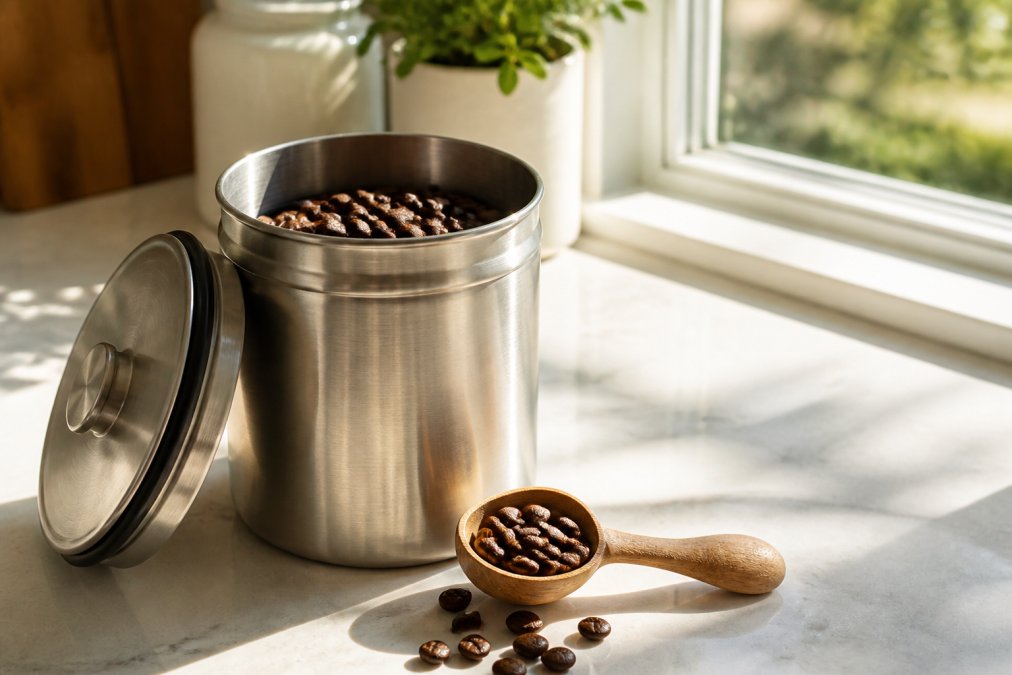
Packaging Technology: The Invisible Freshness Shield
The bag your coffee comes in is more than just a container, it's an engineered environment. High-quality roasters use bags with a one-way degassing valve, a small plastic or metal disc that lets carbon dioxide escape during the first days after roasting without letting oxygen in. This is crucial because freshly roasted beans release up to 10 times their volume in CO2, and if that gas can't escape, the bag could burst (sciencedirect.com). The valve ensures that the beans degas without being exposed to oxygen, which would accelerate staleness.
Some premium packaging goes a step further with nitrogen flushing. Before sealing, the roaster replaces the oxygen inside the bag with nitrogen, an inert gas that doesn't react with the coffee. This can extend the shelf life of unopened beans by months, preserving flavors that would otherwise oxidize. However, once you open the bag, the protective environment is broken, and your storage habits take over. That's why the roast date still matters, even the best packaging can't stop the clock indefinitely.
Climate and Humidity: The Overlooked Variable
Most storage advice assumes a temperate, dry environment, but your local climate plays a huge role in how quickly coffee degrades. In humid regions, like the Gulf Coast or the Pacific Northwest, moisture in the air can seep into even "airtight" containers if they're not truly sealed. Water accelerates the breakdown of coffee's soluble compounds, leading to a flat, dull cup and increasing the risk of mold. If you live in a humid area, consider using a container with a silicone gasket and a clamp lid, and avoid storing beans near the stove or dishwasher where steam is common.
Conversely, in arid climates, beans can dry out faster, losing their aromatic oils. If you're in a dry area, you might find that beans lose their vibrancy a few days earlier than expected. A simple workaround is to store beans in smaller batches, so you're not exposing the entire bag to air each time you open it.
Storage Options: A Detailed Breakdown
Here's a closer look at your options, with the trade-offs spelled out:
- Room temperature (best for daily use): Store beans in an airtight, opaque container in a pantry or cabinet. This protects against oxygen, light, and temperature swings. Expect peak flavor for up to 4 weeks. Choose a container that's just large enough for your beans, too much empty space means more oxygen in the container.
- Refrigeration (avoid for daily use): The fridge exposes beans to moisture and the odors of other foods. Condensation on the beans accelerates staleness and can introduce off-flavors. If you must refrigerate (e.g., in a hot, humid climate without air conditioning), use a vacuum-sealed container and let the beans come to room temperature before opening to prevent condensation.
- Freezing (use with caution for long-term storage): Freezing can extend shelf life for several months, but it requires a vacuum-sealed or fully airtight container to prevent freezer burn. Only freeze whole beans, and grind them frozen without thawing to avoid moisture damage. This is best for beans you won't use within a month, not for your everyday bag.
The Role of the Original Bag
If you're using the original bag, make sure it has a one-way valve and a resealable zipper. After opening, press out as much air as possible before sealing. However, the original bag is not ideal for long-term storage because it's often not fully opaque and may not provide a perfect seal. Transferring beans to a dedicated canister is a better bet, but if you do, keep the roast date label or write it on the new container.
Why Your Brewing Method Changes the Freshness Rules
Freshness is not a one-size-fits-all standard because different brewing methods extract coffee in different ways. Espresso is the most demanding: it relies on high pressure to create a concentrated shot, and any staleness becomes intensely apparent as a flat, sour, or bitter taste. For espresso, you want beans at their absolute peak, usually within 1 to 3 weeks of the roast date.
Filter brew methods, like pour-over or drip, are more forgiving. They use longer contact times and allow for a wider window where the coffee still tastes excellent, typically 2 to 4 weeks post-roast. Cold brew is the most forgiving of all. Because it involves a long, cold extraction over 12 to 24 hours, it is far less sensitive to staleness. Many drinkers find that beans past their prime for espresso still produce a smooth, chocolatey cold brew. If you are nearing the end of your freshness window, cold brew is a smart way to use the beans without wasting them.
Common Mistakes That Ruin Fresh Roasted Coffee
Several everyday habits quietly destroy the freshness of your roasted coffee. The most damaging is storing beans in the original bag without sealing it properly, or transferring them to a clear, non-airtight container. Light and oxygen work together to accelerate oxidation, and a clear jar on the counter is the fastest way to send good beans stale.
Another frequent error is keeping beans in the refrigerator. The moisture and fluctuating temperatures cause condensation, which leaches flavor and invites staleness. A third mistake is buying pre-ground coffee in bulk. Even in an airtight container, ground coffee loses its vibrancy within days because the increased surface area speeds up oxidation. The final culprit is buying more coffee than you can drink within a month. If you are a single household, a 12-ounce bag lasts longer than the freshness window, so consider a sampler pack to rotate through flavors while they are at their best.

Conclusion: Enjoy Your Coffee at Its Best
Getting the most from your roasted coffee comes down to respecting the roast date, storing beans properly in an airtight, opaque container at room temperature, and grinding fresh before each brew. The window for peak flavor is honest but short: aim to finish whole beans within a month of roasting and pre-ground coffee within two weeks.
We roast to order at Paws and Promise Coffee so that the bag you receive starts its freshness clock the moment it leaves our roaster, not months before. Each purchase supports rescue animals at Forever Paws Animal Shelter and meaningful employment programs for adults with intellectual disabilities. Get started with Paws and Promise Coffee and taste the difference that true freshness, and a mission, makes in every cup.
Frequently Asked Questions
Is coffee roasted 4 months ago still good?
It's safe to brew, but the flavor has faded. Roasted coffee hits its peak flavor between 1 and 4 weeks after the roast date. At 4 months, the aromatic oils have oxidized, leaving a flat, papery, or cardboard-like cup. You can still drink it, but you are not experiencing the coffee as the roaster intended. For the full sensory experience, look for bags with a recent roast date and finish them within a few weeks of opening.
Can roasted coffee go bad?
Roasted coffee does not spoil in a way that makes you sick, but it does go stale. Staling is the loss of volatile aromatic compounds and the oxidation of oils. You will notice the aroma fades, the crema thins, and the flavor becomes flat or bitter. Whole beans stay fresher than pre-ground because grinding exposes more surface area to oxygen. Proper storage in an airtight, opaque container slows this process.
What is the best way to store coffee long term?
For long-term storage, your freezer is the best option. Portion whole beans into small, vacuum-sealed or airtight bags, then freeze them. Remove only what you need and return the rest to the freezer quickly to prevent moisture from condensing on the beans. Never refreeze beans after thawing. For daily use, keep beans in an airtight, opaque container at room temperature, away from sunlight and heat.
Does coffee freshness affect caffeine content?
No, caffeine is a stable compound. It does not degrade as coffee goes stale. A stale cup will taste weaker and flatter, which might make you think it has less caffeine, but the chemical amount remains nearly identical to a fresh cup. The difference you notice is in flavor, aroma, and body, not stimulation. If you need a caffeine boost, stale coffee still delivers it.