

Table of Contents
- What You'll Need Before You Brew Specialty Tea
- Essential Tea Brewing Tools for Loose Leaf at Home
- Best Water Temperature for Green Tea and Every Other Style
- Tea Steeping Times Chart: From Green to Black to Herbal
- Step-by-Step: How to Brew Specialty Tea at Home
- How to Cold Brew Specialty Tea at Home
- Troubleshooting Bitter or Weak Tea
- Frequently Asked Questions
Last Updated: September 1, 2026
Most home brewers are doing at least one thing wrong, not catastrophically, but wrong enough to turn a $15 bag of beautiful loose leaf tea into a flat, bitter, or flavorless cup. The good news: every common mistake has a simple fix.
At Paws and Promise Coffee, we source specialty teas with the same care we bring to our ethically sourced coffee. Below, we'll walk you through everything you need to know to brew specialty tea at home, from water chemistry and vessel choice to steeping times, cold brewing, and troubleshooting. Whether you're working with our hand-picked Jasmine green tea or a bold Masala Chai, these techniques make a real difference.

What You'll Need Before You Brew Specialty Tea
Specialty tea is any high-quality tea produced with attention to cultivar, terroir, and processing method, the same way specialty coffee is distinguished from commodity blends. The grade of your tea leaves directly affects how they respond to heat, water, and time.
Before you start, confirm you have loose leaf tea (not pre-bagged), filtered or low-mineral water, a way to measure water temperature, and know the style of tea you're brewing. Getting these basics right sets the foundation for everything else.
Essential Tea Brewing Tools for Loose Leaf at Home
The right equipment does not need to be expensive. It needs to be appropriate.
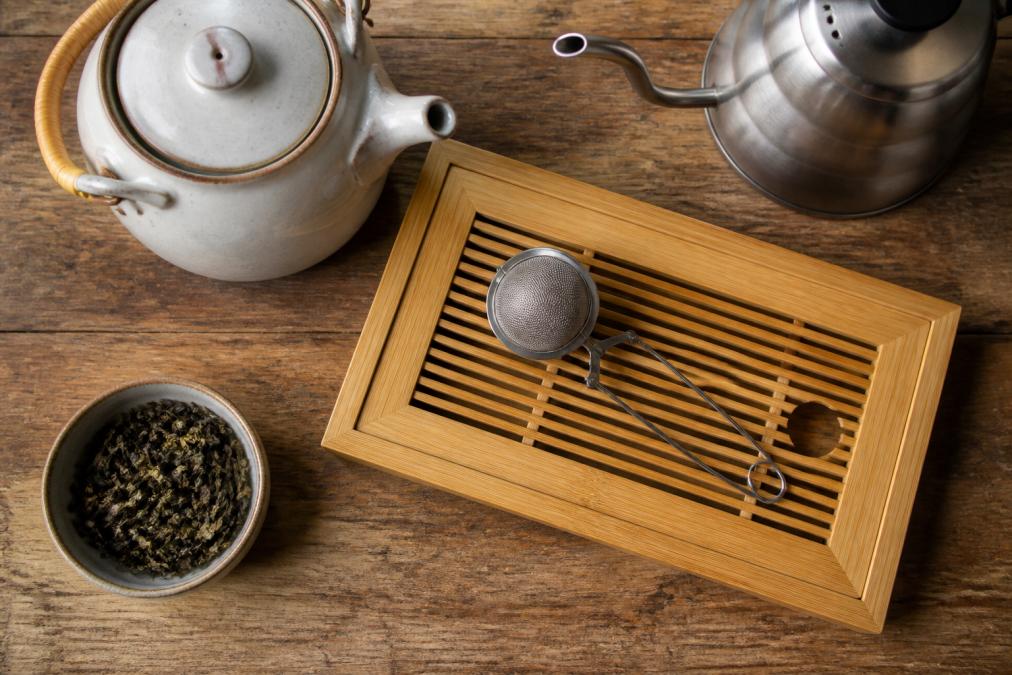
A gooseneck kettle with a built-in thermometer is the single most useful tool you can own for brewing specialty tea at home. It gives you precise temperature control and a slow, even pour, both essential for delicate teas.
A solid home setup includes:
- Gooseneck kettle with temperature control, essential for anything other than black tea
- Mesh infuser or strainer, keeps leaves separate without restricting expansion
- Brewing vessel, ceramic, glass, or clay depending on tea style
- Digital kitchen scale, for repeatable tea-to-water ratios
- Timer, precision matters more than the tool
Vessel Material and Its Impact on Flavor
The material of your brewing vessel affects heat retention, aroma absorption, and even the flavor of the infusion itself.
Unglazed clay (like Yixing clay) is porous and absorbs trace compounds from tea over time. Many gongfu tea practitioners dedicate a single clay pot to one type of tea, allowing the vessel to develop a seasoned flavor layer.
Ceramic is the most versatile option. It retains heat well, does not absorb flavor compounds, and works across all tea styles. A good ceramic teapot or gaiwan is the best starting point for most home brewers.
Glass is ideal for teas where the visual experience matters. Glass does not retain heat as well, so it works best for shorter steeps or cold brew.
Stainless steel is practical but contributes a subtle metallic note that can flatten delicate tea aroma. Reserve it for travel.
Best Water Temperature for Green Tea and Every Other Style
Water temperature is the single variable that separates a good brew from a ruined one. The best water temperature for green tea sits between 160°F and 175°F, well below boiling (peer-reviewed research). Pour boiling water over high-grade green tea and you'll extract harsh tannins and destroy the delicate vegetal and floral notes.
Here's a practical reference across tea styles:
| Tea Style | Recommended Temperature | Notes |
|---|---|---|
| White tea | 160°F - 170°F | Very delicate; lower end for top-grade |
| Green tea | 160°F - 175°F | Never boiling; jasmine green toward lower end |
| Oolong (light) | 175°F - 185°F | Partially oxidized; treat closer to green |
| Oolong (dark) | 185°F - 205°F | Heavily oxidized; closer to black tea |
| Black tea | 200°F - 212°F | Full boil acceptable; strong extraction |
| Herbal infusion | 200°F - 212°F | Most herbals need full boil to extract properly |
| Masala Chai | 200°F - 212°F | Spices require high heat to release compounds |
A Jasmine green tea from Paws and Promise Coffee brewed at 212°F will taste bitter and grassy. The same leaves at 170°F produce a sweet, smooth, silky cup with genuine floral aroma.

Water Chemistry: Why Filtered Water Changes Everything
Tap water quality varies enormously by location, and those differences show up directly in your cup. Hard water (high in calcium and magnesium) tends to suppress brighter, more delicate flavor notes in green and white teas (peer-reviewed research). Soft water extracts more cleanly but can make black teas taste thin.
The practical recommendation: use filtered water with moderate mineral content. A standard carbon filter removes chlorine and chloramines that compete with tea aroma.
Tea Steeping Times Chart: From Green to Black to Herbal
Steep time controls extraction. Too short and the brew is weak. Too long and you're pulling excess tannins, which produce the dry, puckering astringency that makes people think they dislike tea when they actually just over-steeped it.
| Tea Style | First Steep Time | Re-steep Time | Max Steeps |
|---|---|---|---|
| White tea | 2 - 3 minutes | Add 30 sec each | 3 - 4 |
| Green tea (Jasmine) | 1.5 - 2 minutes | Add 30 sec each | 3 - 5 |
| Light oolong | 2 - 3 minutes | Add 30 - 45 sec | 4 - 6 |
| Dark oolong | 3 - 4 minutes | Add 45 sec each | 4 - 6 |
| Black tea (English Breakfast, Earl Grey) | 3 - 5 minutes | Add 60 sec each | 2 - 3 |
| Masala Chai | 4 - 5 minutes | Add 60 sec each | 2 - 3 |
| Herbal infusion | 5 - 7 minutes | Variable | 1 - 2 |
These are starting points. Adjust based on your taste preference and the specific tea grade you're working with. High-grade loose leaf generally tolerates slightly shorter steeps because whole or gently rolled leaves extract more slowly than broken-leaf grades.

Managing Tannins to Prevent Bitterness and Astringency
Tannins are naturally occurring polyphenols present in all true teas (peer-reviewed research). They contribute structure and mouthfeel, but in excess, they produce harsh bitterness and astringency.
Three variables drive tannin extraction: temperature, time, and surface area. To manage tannins deliberately:
- Lower your water temperature by 5°F to 10°F if bitterness is a consistent problem
- Shorten steep time before adjusting anything else
- Use whole or gently rolled loose leaf over broken-grade tea
- Decant immediately when the steep time ends
Step-by-Step: How to Brew Specialty Tea at Home
Here is the complete process to brew specialty tea at home, from water to cup.
Total Time: 8 - 12 minutes Difficulty: Beginner
What You'll Need:
- Loose leaf tea (check your tea's product page for the amount: most of ours call for 1 teaspoon, about 2.5 g, per 12 oz of water)
- Filtered water
- Temperature-controlled kettle
- Brewing vessel with infuser or strainer
- Timer
Step 1: Heat your water to the correct temperature [Time: 3 - 5 minutes] Set your kettle to the target temperature for your tea style using the chart above. If you don't have a temperature-controlled kettle, bring water to a full boil and let it rest uncovered: one minute drops the temperature roughly 10°F.
Step 2: Warm your brewing vessel [Time: 1 minute] Pour a small amount of hot water into your teapot or gaiwan, swirl, and discard. This prevents your vessel from pulling heat away from the brew.
Step 3: Measure your tea leaves [Time: 1 minute] Start with the ratio printed on your tea's product page: that's the most reliable guide for that specific leaf, because denser styles and bulky herbal blends measure differently by volume. As a general starting point across our loose leaf teas, about 1 teaspoon (roughly 2.5 g) per 12 oz of water works well. For gongfu-style brewing, use larger amounts of leaf per 100 ml and steep for shorter intervals.
Step 4: Add water and start your timer Pour heated water over the leaves in a slow, steady stream. Start your timer immediately.
Step 5: Decant at the right moment When the timer ends, pour the entire brew into a serving vessel immediately. Do not leave leaves in contact with water after the steep time ends.
Expected Result: A clear, aromatic brew with balanced flavor and no harsh bitterness.
Re-Steeping Loose Leaf Tea for Multiple Infusions
Quality loose leaf tea is designed to be steeped multiple times. High-grade whole leaf teas, like the Jasmine green tea from Paws and Promise Coffee, are good for three to five steepings. Each infusion reveals a slightly different flavor profile as different compounds extract at different rates.
Add 30 seconds to each successive steep time for green and white teas, and 45 to 60 seconds for oolongs and black teas.
How to Cold Brew Specialty Tea at Home
Cold brewing produces a fundamentally different extraction than hot steeping. Because no heat is involved, tannin extraction is dramatically reduced. The result is a naturally sweet, smooth, low-astringency tea concentrate with a clean mouthfeel.
Cold Brew Method:
- Add 1 tablespoon of loose leaf tea per 8 oz of cold, filtered water
- Combine in a sealed glass jar or pitcher
- Refrigerate for 8 to 12 hours (overnight works perfectly)
- Strain leaves and serve over ice
Green teas, jasmine teas, and light oolongs are exceptional cold brewed. The Jasmine tea from Paws and Promise Coffee is particularly well suited to cold brewing, as the floral aromatics stay intact through the cold extraction process.
Troubleshooting Bitter or Weak Tea
Bitter tea and weak tea are the two most common complaints from home brewers. Both are easy to diagnose and fix.
Tea is too bitter or astringent:
| Problem | Likely Cause | Fix |
|---|---|---|
| Harsh, dry finish | Water too hot | Lower temperature by 10°F |
| Overwhelming bitterness | Over-steeped | Reduce steep time by 30 - 60 seconds |
| Flat and tannic | Poor water quality | Switch to filtered water |
| Bitter from first pour | Tea grade too fine | Use whole leaf; avoid fannings |
Tea is too weak or watery:
| Problem | Likely Cause | Fix |
|---|---|---|
| No flavor, watery | Too little leaf | Increase ratio to 1.5 tsp per 8 oz |
| Thin body | Water not hot enough | Increase temperature by 10°F |
| Fades quickly | Low-grade tea | Invest in higher-grade loose leaf |
| Pale color, no aroma | Under-steeped | Add 30 - 60 seconds to steep time |
The most common mistake is adjusting multiple variables at once. Change one thing at a time, temperature first, then time, then ratio, so you can identify what actually made the difference.
If your tea consistently tastes flat regardless of technique, the issue may be the leaves themselves. Specialty loose leaf tea has a shelf life. Properly stored tea stays fresh for 12 to 18 months; poorly stored tea degrades much faster. Store loose leaf tea in an airtight, opaque container away from heat, light, and moisture. Never store tea near coffee, spices, or anything strongly aromatic.
Brewing specialty tea at home is one of those skills that rewards small investments of attention with outsized results. The gap between a mediocre cup and an exceptional one is almost never the tea itself, it's the temperature, the timing, and the water. Paws and Promise Coffee sources teas like our Jasmine green, Masala Chai, English Breakfast, and Earl Grey with the same commitment to quality and ethical sourcing that defines everything we do. Every purchase supports Forever Paws Animal Shelter and Sweet Inspirations' employment programs. Add one of our specialty teas to your cart and put these techniques to work with leaves worth brewing right.
Frequently Asked Questions
What is the difference between specialty tea and standard tea bags?
Specialty tea uses whole or minimally broken loose leaves, which retain more of their natural oils, aroma, and flavor compounds. Standard tea bags typically contain fannings or dust, the smallest particles left after processing, which extract quickly but produce a flat, one-dimensional cup. Loose leaf specialty teas like a hand-picked jasmine green or a bold Masala Chai offer complex tasting notes, better mouthfeel, and the ability to re-steep multiple times, giving you far more value per gram.
How does water temperature affect the flavor of specialty tea?
Water temperature directly controls which compounds extract from the leaves. Too hot, and you pull excess tannins from green or white teas, creating harsh bitterness and high astringency. Too cool, and you under-extract black or oxidized teas, leaving the cup thin and flat. Green teas thrive between 160°F and 180°F, while black teas like English Breakfast or Earl Grey need 200°F to 212°F to fully open their flavor profile and aroma.
How long should you steep different types of specialty tea?
Steep times vary by tea type and leaf grade. Green teas generally need 1 to 3 minutes; steeping longer risks bitterness from tannin over-extraction. Oolong teas do well at 2 to 4 minutes. Black teas like Masala Chai or English Breakfast take 3 to 5 minutes for a full-bodied infusion. Herbal infusions often need 5 to 7 minutes since they contain no tea leaves and require longer contact time to develop flavor. Always start at the lower end and adjust to taste.
Why is it important to use filtered water when brewing tea?
Tap water often contains chlorine, chloramines, and high mineral content that compete with or mask a tea's natural flavor profile. Chlorine in particular flattens delicate aromas. Filtered water with a balanced mineral content, around 50 to 150 parts per million total dissolved solids, allows the tea's true tasting notes to come through clearly. For specialty loose leaf teas, water quality is one of the most impactful variables you can control at home.
This article was written using GrandRanker