

Table of Contents
- What Is Mushroom Coffee and How Does It Differ from Regular Coffee?
- How Functional Mushrooms Affect Digestion and the Gut Microbiome
- Caffeine, Acidity, and Why Mushroom Coffee May Be Gentler on Your Stomach
- Best Mushrooms for Gut Health: Lion's Mane, Reishi, and Cordyceps
- Side Effects of Mushroom Coffee: What to Expect and Who Should Avoid It
- How to Choose a High-Quality Mushroom Coffee Without the Hype
- How to Test Your Tolerance and Build a Gut-Friendly Routine
- Conclusion
- Frequently Asked Questions
Last Updated: September 26, 2026
What Is Mushroom Coffee and How Does It Differ from Regular Coffee?
Mushroom coffee blends ground coffee beans with dried, powdered functional mushrooms, most often lion's mane, reishi, and cordyceps. It brews like regular coffee but has a different acidity profile and a fraction of the caffeine.

Functional Fungi vs. Medicinal Mushrooms: What's in Your Cup
The mushrooms in your cup are usually called functional fungi, used for everyday wellness rather than as medicine. The term "medicinal mushrooms" implies a clinical role these products do not have.
How Functional Mushrooms Affect Digestion and the Gut Microbiome
The gut microbiome is the community of bacteria, fungi, archaea, and viruses in your digestive tract, roughly 100 trillion cells encoding far more genes than your own genome. Functional mushrooms may support that community through compounds called polysaccharides, but the mechanism is more specific than most articles admit.
- Beta-glucans are the best-studied polysaccharides in functional mushrooms. These cell-wall carbohydrates resist human digestive enzymes, so they arrive intact in the colon where gut bacteria ferment them.
- Prebiotics feed existing beneficial microbes. The fermentation byproduct is short-chain fatty acids, primarily butyrate, acetate, and propionate, the actual currency of gut health.
- Adaptogens is a marketing-adjacent term for mushrooms like reishi that are traditionally used to help the body manage stress.
What Actually Happens in Your Colon
When beta-glucans and other mushroom polysaccharides reach the colon, bacteria such as Bifidobacterium and Lactobacillus ferment them. The resulting short-chain fatty acids feed colon cells, lower gut pH (making it harder for harmful bacteria to establish), and interact with immune cells in the gut wall.
Microbiome Diversity: The Angle Most Guides Skip
Gut health researchers increasingly focus on diversity, the number of different bacterial species present, rather than the abundance of any single one. A more diverse microbiome is generally associated with better resilience against disruptions like antibiotics or a bad food week.
Polysaccharides, Prebiotics, and the Gut-Brain Axis
The gut-brain axis is the two-way communication line between your digestive system and your brain, running along the vagus nerve and through microbial metabolites, which is why digestive discomfort often shows up as a bad mood. Short-chain fatty acids from prebiotic fermentation can influence that signaling.
Extraction Method Determines Whether Any of This Reaches Your Gut
A polysaccharide locked inside an intact cell wall does your microbiome no good. Extraction method matters more than the mushroom species on the label.
- Hot-water extraction pulls out water-soluble beta-glucans and is the traditional method for making mushroom tea.
- Alcohol extraction pulls out fat-soluble compounds like triterpenes, which are not prebiotic but are studied for other effects.
- Dual extraction uses both solvents in sequence, which is why quality labels specify it. A water-only extract may leave a meaningful fraction of compounds behind.
Caffeine, Acidity, and Why Mushroom Coffee May Be Gentler on Your Stomach
Mushroom coffee typically delivers less caffeine per cup than standard coffee because mushroom powder displaces some of the coffee grounds. Less caffeine often means less stimulation of stomach acid production, one reason sensitive drinkers find it easier to tolerate.

Best Mushrooms for Gut Health: Lion's Mane, Reishi, and Cordyceps
Lion's mane, reishi, and cordyceps are the three mushrooms most commonly blended into coffee. Lion's mane is associated with digestive and cognitive support, reishi with calm and immune support, and cordyceps with energy and physical performance.
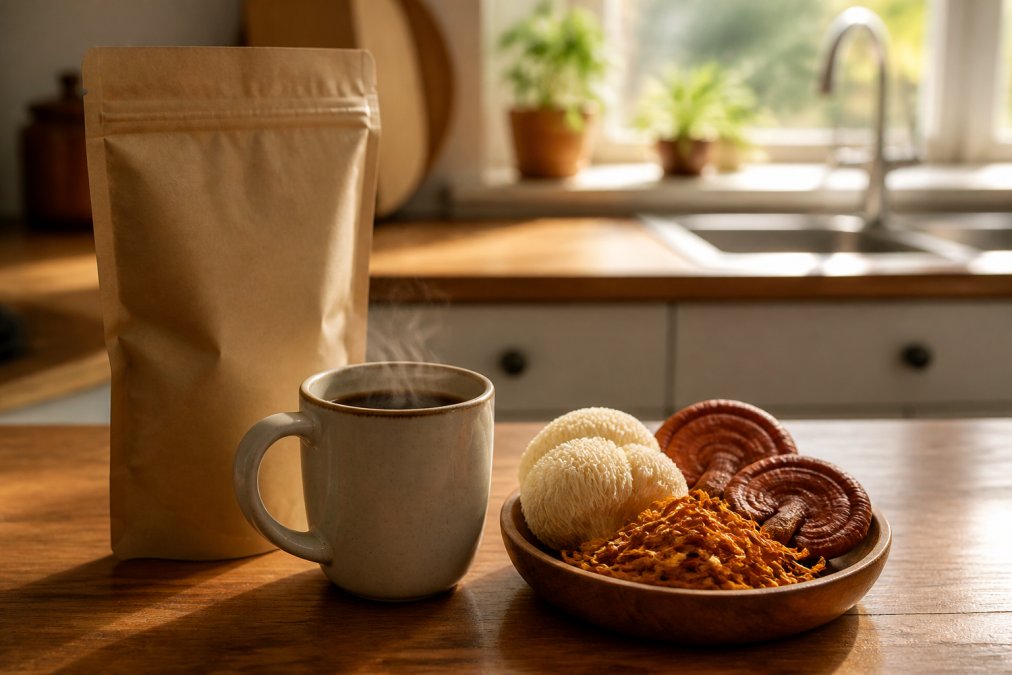
| Mushroom | Traditional Use | Flavor Contribution | Best For |
|---|---|---|---|
| Lion's mane | Digestion, focus | Mild, slightly sweet | Daily drinkers wanting a smooth cup |
| Reishi | Calm, immune support | Earthy, mildly bitter | Evening or low-caffeine routines |
| Cordyceps | Energy, stamina | Neutral, easy to hide | Morning energy without a heavy crash |
Side Effects of Mushroom Coffee: What to Expect and Who Should Avoid It
Most people tolerate mushroom coffee well, but the side effects of mushroom coffee are worth knowing before committing to a daily cup. The most common complaints are mild bloating, gas, or loose stools during the first week as your gut adjusts to new prebiotic fibers.
How to Choose a High-Quality Mushroom Coffee Without the Hype
Knowing how to choose a high-quality mushroom coffee comes down to three things: extract quality, the coffee base, and honest labeling. Many blends list mushrooms on the front of the bag while using mostly mycelium grown on grain, diluting the compounds you want.
Mushroom Coffee Dark Roast with Lion's →
- Mushrooms listed as fruiting body extract, not mycelium
- Dual extraction mentioned on the label
- Roast date printed, not just a best-by date
- Caffeine content stated per serving
- No proprietary blend hiding the mushroom amounts
Quick Comparison: Roast, Format, and Flavor
| Format | Roast | Flavor Notes | Best For |
|---|---|---|---|
| Dark roast ground | Dark | Dark chocolate, bold | Espresso, moka pot, drip |
| Medium roast ground | Medium | Caramel sweetness, balanced | Pour-over, French press |
| Instant | Medium and dark | Smooth, earthy sweetness | Travel, office, iced coffee |
How to Test Your Tolerance and Build a Gut-Friendly Routine
Individual tolerance testing is the step almost every guide skips, and it determines whether mushroom coffee works for you. Here is the protocol.
The Two-Week Introduction Protocol
Days 1-3: Baseline single cup. Brew one cup at your normal morning time on days you will be home. Drink it on an empty stomach the first day, then with food on days two and three, noting your stomach status at the 1-hour, 3-hour, and 6-hour marks.
What Symptoms Mean What
Not all digestive reactions are the same:
- Mild gas or bloating within 1-2 hours, normal fermentation response. Usually fades within a week as your microbiome adjusts.
- Loose stools or urgency, slow down. Drop back to half a cup or every-other-day use.
- Cramping or sharp pain, stop and consult a clinician. This is not a typical adaptation response.
- Reflux or heartburn, likely the coffee fraction, not the mushrooms. Try a lower-acid roast or a smaller serving.
- No symptoms at all, you may simply tolerate it well. Increase cautiously, not aggressively.
Interactions Worth Knowing About
- IBS medications (antispasmodics, low-dose antidepressants): Prebiotic fibers can change gut motility, which may amplify or blunt the effect of motility-altering drugs. Introduce one variable at a time.
- Probiotic supplements: Mushroom prebiotics and probiotic capsules are not redundant, one feeds bacteria, the other adds them. But starting both in the same week makes it impossible to tell which caused a reaction. Space them two weeks apart.
- Acid-reducing medications (PPIs, H2 blockers): These change stomach pH, which can affect how your body handles the coffee fraction. If you are on one, start with a half-cup.
- Blood thinners: Reishi and other functional mushrooms have been studied for antiplatelet activity. This is a conversation for your prescriber, not a blog.
Building the Routine After You've Tested
Once you have a comfortable dose, keep the rest of your routine boring. Same time, same amount, same blend. Consistency is what lets you tell whether a change is helping.
A few practical anchors:
- Pair with food if you are sensitive. A cup alongside breakfast buffers both the caffeine and the fiber load.
- Front-load the day. If caffeine affects your sleep, keep mushroom coffee before noon even at low doses.
- Hydrate. Prebiotic fibers pull water into the gut. An extra glass of water with your cup reduces the chance of constipation.
- Re-test after a break. If you stop for a month and restart, treat it like day one again. Your microbiome composition shifts.
When to Stop Entirely
Stop mushroom coffee and see a clinician if you develop hives, throat tightness, or swelling, these suggest a mushroom allergy, uncommon but real. Stop if digestive symptoms worsen past two weeks rather than improving, or if new symptoms appear. A product that does not agree with you is not one to push through.
Conclusion
Finding a morning cup that respects your stomach should not require guesswork or a shelf of supplements. Paws and Promise Coffee roasts ethically sourced, functional mushroom coffee to order, offers dark roast, medium roast, and instant formats, and donates 10% of every sale to Forever Paws Animal Shelter and Sweet Inspirations' supportive employment programs. You get freshness you can taste and a purchase that supports rescue animals and meaningful work for adults with intellectual disabilities.
Frequently Asked Questions
What is the downside to mushroom coffee?
The most common downside is digestive adjustment. Some people notice bloating, gas, or loose stools during the first week, especially if they jump straight to a full cup. Mushroom coffee also contains caffeine, so caffeine sensitivity still applies. Rarely, people allergic to mushrooms may react. Start with half a cup and increase gradually to see how your body responds.
Does mushroom coffee contain probiotics or prebiotics?
Mushroom coffee does not contain live probiotics, but the mushrooms themselves provide prebiotic fibers and polysaccharides that feed beneficial bacteria in your gut. Lion's mane, reishi, and cordyceps all contribute these compounds. Think of them as food for your existing gut microbiome rather than a direct dose of new bacteria. A balanced diet with fermented foods still matters for overall gut diversity.
What happens if I drink mushroom coffee every day?
Daily consumption is generally well tolerated for most healthy adults. You may notice smoother digestion, steadier energy, and less of the jittery crash that comes with higher-caffeine coffee. Some people report improved bowel regularity after a couple of weeks. If you take medications for acid reflux, diabetes, or blood thinners, check with your doctor first, since reishi and other medicinal mushrooms can interact with certain drugs.
How do medicinal mushrooms interact with the gut microbiome?
Medicinal mushrooms act as prebiotics, meaning their fibers and polysaccharides feed beneficial gut bacteria. This can support short-chain fatty acid production, which helps maintain gut barrier function. Lion's mane may also support the gut-brain axis, the communication line between digestion and mood. Results vary by person, and the extract quality matters. A well-extracted mushroom coffee gives you more of these compounds per cup.