

Table of Contents
- What Separates a Good Specialty Tea Gift Set From a Dusty Shelf Sitter
- Comparison Table: Specialty Tea Gift Sets at a Glance
- Best Overall: A Build-Your-Own Loose Leaf Assortment
- Best for Caffeine-Sensitive Giftees: Herbal and Rooibos Picks
- How to Brew Specialty Tea at Home (So the Gift Doesn't Go to Waste)
- Tea Brewing Accessories for Beginners: What to Pair With the Set
- Best Tea Storage Practices: Keeping Loose Leaf Fresh After Gifting
- Conclusion
- Frequently Asked Questions
Last Updated: September 11, 2026
What Separates a Good Specialty Tea Gift Set From a Dusty Shelf Sitter
The best specialty tea gift sets are built around fresh loose leaf tea, clear caffeine labeling, and a flavor profile matched to the person receiving it, not around decorative packaging that hides stale leaves. A gift set is a curated collection of teas, and often teaware, presented together for a gift-giving occasion. This guide from Paws and Promise Coffee breaks down what actually matters when you're choosing one.
Here's the uncomfortable truth most gift guides skip: a beautiful box means nothing if the tea inside was harvested years ago and sat in a warehouse. Tea is an agricultural product. It fades. So the first question isn't "which box looks nicest" but "how fresh is what's inside, and does it suit the drinker?"
Below, we'll cover caffeine content, flavor profiles, brewing basics, and storage, plus a comparison table you can scan in thirty seconds. The goal is simple: pick a set the recipient will actually finish.
Caffeine, Flavor, and the Person You're Buying For
Caffeine is the single most overlooked factor in tea gifting. Get it wrong and your gift sits untouched on a shelf.
Black tea, green tea, and most fruit teas carry caffeine (peer-reviewed research). Herbal infusions, rooibos, and hibiscus blends are naturally caffeine-free (peer-reviewed research). If your giftee drinks tea after dinner, avoids stimulants, or is pregnant, a caffeine-free herbal selection is the safer pick. If they need a morning lift, a bold black tea or spiced chai lands better.
Flavor matters just as much. Mild drinkers gravitate toward white tea, jasmine green tea, or light fruit blends. Adventurous palates enjoy smoky oolong, masala chai, or matcha. When in doubt, a variety pack lets them discover their own preference instead of gambling on one tin.

Comparison Table: Specialty Tea Gift Sets at a Glance
| Set Style | Caffeine Level | Best For | Typical Format |
|---|---|---|---|
| Loose leaf assortment | Varies by blend | Most gift-givers | 3 oz resealable pouches |
| Herbal and rooibos picks | Caffeine-free | Evening drinkers, caffeine-sensitive | Loose leaf or sachets |
| Green and white tea selection | Low to moderate | Mild, delicate palates | Loose leaf |
| Spiced and black tea set | High | Morning coffee drinkers | Loose leaf |
| Powdered tea (hojicha, matcha) | Low to moderate | Lattes, whisking enthusiasts | Powdered |
Caffeine-free doesn't mean flavor-free, and that distinction trips up a lot of buyers. A well-made rooibos or hibiscus blend delivers body and sweetness without any stimulant at all.
Best Overall: A Build-Your-Own Loose Leaf Assortment
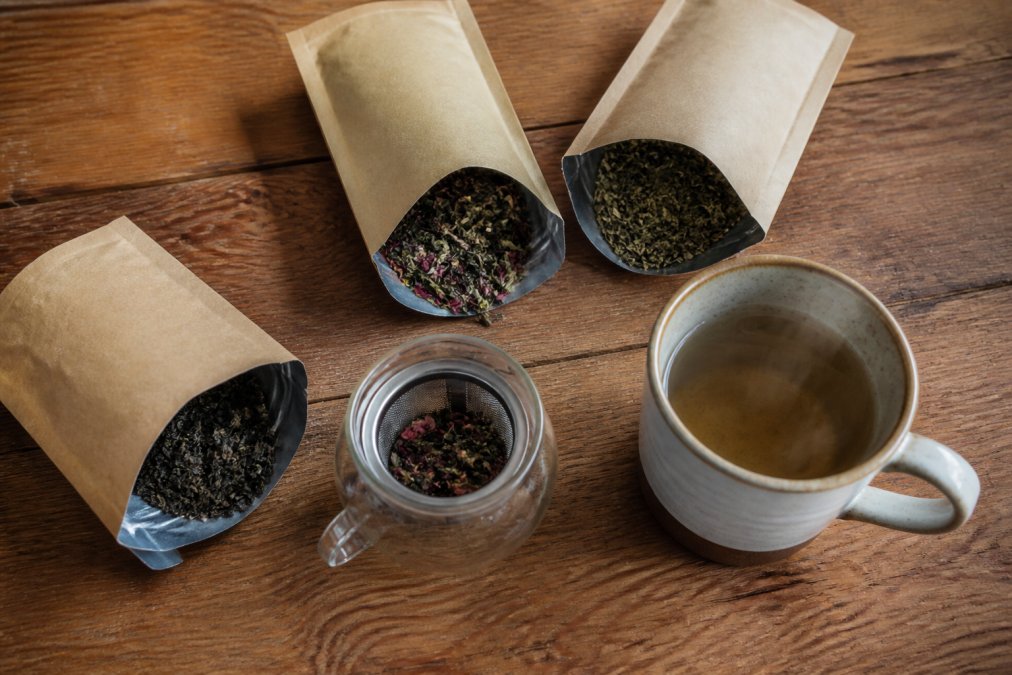
The strongest specialty tea gift sets are the ones you assemble yourself from single-origin loose leaf pouches, because you control both the caffeine mix and the flavor range. Instead of accepting whatever a pre-packed box offers, you pick three or four blends that match the recipient.
At Paws and Promise Coffee, every tea pouch is 3 oz of loose leaf, resealable, and priced at $14.98, which makes building a custom set straightforward. A balanced starter combination:
- English Breakfast Black Tea for the morning caffeine drinker, malty and brisk
- Jasmine Green Tea for a lighter, floral afternoon cup
- Peach Paradise Herbal Tea as a caffeine-free evening option
- Apple Cider Rooibos Herbal Tea for a spiced, naturally sweet finish
Why Loose Leaf Beats Sachets in a Gift
Loose leaf tea gives you full leaves instead of dust and fannings, and full leaves steep into a rounder, more complex cup. Sachets win on convenience, but they rarely showcase what a tea can actually taste like.

There's a practical angle too. A 3 oz pouch of loose leaf brews roughly 30 to 35 cups, so a four-pouch set delivers well over a hundred cups. That's a gift with real mileage rather than a one-week novelty.
The tradeoff is equipment. Loose leaf needs an infuser or a teapot with a built-in strainer, which is why pairing the set with basic teaware makes sense for beginners.
Best for Caffeine-Sensitive Giftees: Herbal and Rooibos Picks
Caffeine-free herbal infusions are the right call for anyone who drinks tea in the evening, avoids stimulants, or simply reacts badly to caffeine. Rooibos, hibiscus, and fruit blends deliver sweetness and body without any caffeine at all.
Two standouts for this category:
Apple Cider Rooibos Herbal Tea brings baked apple, cinnamon, and orange peel together in a cup that tastes like autumn year-round. It's naturally caffeine-free and sweet enough that it needs no sugar.
Hibiscus Berry Herbal Tea is organic, tart, and built for cold brewing. Blueberry, currant, and hibiscus notes make it a refreshing iced option in warmer months.
For a caffeine-sensitive giftee, a two-pouch set of these plus a simple infuser covers hot and iced drinking without a single stimulant in the box.
How to Brew Specialty Tea at Home (So the Gift Doesn't Go to Waste)
Brewing specialty tea at home comes down to three variables: water temperature, steep time, and leaf quantity. Get those right and even a beginner produces a genuinely good cup.
Here's the practical breakdown by tea type:
- Green tea: 175-180 F, 2-3 minutes, 1 teaspoon per 12 oz. Overheating turns it bitter.
- Black tea: 195-205 F, 4-5 minutes, 1 teaspoon per 12 oz.
- Herbal and rooibos: boiling water, 5-7 minutes, 1 heaping teaspoon per 12 oz.
- Tea powder: whisk 1-2 g into 2 oz of water at about 175 F until frothy.
The most common mistake is using fully boiling water on green tea. It scorches the leaves and produces a harsh, astringent cup that makes people think they dislike green tea when they've simply brewed it wrong.
Most loose leaf teas also reward multiple steepings. A good jasmine or Moroccan mint holds up to a second and third pour, which stretches each pouch further.
Tea Brewing Accessories for Beginners: What to Pair With the Set
Tea brewing accessories for beginners don't need to be expensive, but the wrong accessory can quietly ruin a good gift. The real question isn't "what gear exists", it's "what gear does this specific set require to work?" A gaiwan gifted to someone who only owns a mug is a paperweight. A basket infuser gifted with a delicate white tea is a daily habit.
Start by matching the vessel to the tea format, because not every set is brewed the same way:
- Loose leaf in a mug: needs a basket infuser or a large-mouth mesh strainer. This is the lowest-friction setup and the right default for beginners.
- Loose leaf in a pot: needs a teapot with a built-in strainer or a removable infuser basket. Works best for black tea and herbal blends, where you're steeping 12 to 32 oz at once.
- Powdered tea (matcha, hojicha): needs a bowl, a bamboo whisk (chasen), and a small scoop. A basket infuser is useless here, powder suspends in the water rather than steeping out of it.
- Compressed or ball-rolled tea (oolong, pu-erh): needs a gaiwan or a small clay pot so you can do short, repeated steeps and watch the leaves unfurl.
- Sachets or tea bags: need nothing beyond a mug and hot water. If the recipient has never brewed loose leaf, this is the honest starting point.
A few practical specs worth knowing before you buy:
- Basket infusers should be fine-mesh (roughly 0.3 mm openings or smaller) so fannings don't slip through, and wide enough that leaves can expand to three or four times their dry size.
- Variable-temperature kettles matter most for green and white tea, which brew best around 175-180 F. A kettle with preset temperatures removes the guesswork; a stovetop kettle plus a thermometer works too, just with more attention.
- A small kitchen scale is more accurate than a measuring spoon for rolled or dense teas. One teaspoon of a fluffy white tea and one teaspoon of a dense rolled oolong are very different weights.
- A simple teapot or a large mug with room for the infuser is enough for most drinkers. You do not need a full ceremony set to enjoy loose leaf daily.
If you're gifting to someone brand new to loose leaf, pairing a two-pouch set with a basket infuser removes the biggest friction point. They can start brewing the same day, in the mug they already own.
USDA food safety guidance on safe drinking water temperatures
Best Tea Storage Practices: Keeping Loose Leaf Fresh After Gifting
The best tea storage practices protect loose leaf from four enemies: air, light, moisture, and strong smells. Tea is hygroscopic and porous, it absorbs whatever is around it, so a pouch left open next to spices will taste like spices within weeks. That's not a metaphor; it's chemistry. The dried leaf keeps pulling in ambient odors and humidity until it's sealed away from them.
A few rules that make a real difference:
- Keep tea in the resealable pouch it arrived in, or transfer it to an airtight tin. The pouch's foil or kraft barrier is doing more work than most decorative tins.
- Store it away from light, ideally in a cupboard rather than on an open shelf. UV accelerates the oxidation that flattens flavor.
- Keep it away from coffee, spices, and anything strongly scented. A shared pantry shelf is a flavor-transfer risk.
- Use it within roughly six months of opening for peak flavor. Green and white teas fade fastest; black, rooibos, and pu-erh hold up longer.
Resealable kraft pouches handle most of this well, which is one reason loose leaf sold this way travels better as a gift. If the recipient wants to display the tea, an opaque tin with a tight lid solves the light problem, but only if the tin actually seals. A loose-fitting lid on a pretty tin is worse than the original pouch.
The Sustainability Angle Most Gift Guides Skip
Storage and sourcing are connected more than they look. A tea that was grown, shipped, and packaged with care is worth storing well, and the packaging itself is part of the gift's footprint. A few things worth checking on the label or the seller's page:
- Compostable or recyclable packaging. Kraft and paper pouches with a plant-based liner break down more readily than foil-laminated bags. If the pouch has a plastic window or a foil interior, check whether the seller offers a take-back or refill option.
- Fair trade or direct-trade sourcing. Certifications like Fair Trade Certified or Rainforest Alliance indicate a verified supply chain; "direct trade" is unregulated and means whatever the seller says it means, so look for specifics about farm relationships.
- Carbon-neutral shipping. Some sellers offset shipping emissions; others consolidate orders to reduce trips. Neither is standard, so it's worth asking.
- Organic certification. USDA Organic is a verifiable standard for the leaf itself, separate from packaging claims.
None of these make a tea taste better on their own. But for a gift-giver who cares about where a product comes from, they're the difference between a nice box and a considered one.
Conclusion
Choosing among specialty tea gift sets comes down to matching caffeine level, flavor profile, and brewing setup to one specific person, not chasing the fanciest box. Get those three right and the gift gets used every week.
At Paws and Promise Coffee, every 3 oz pouch of loose leaf tea is $14.98, and 10% of every order supports two causes: Forever Paws Animal Shelter and Sweet Inspirations, which creates meaningful jobs for adults with intellectual disabilities. You can build a custom set from jasmine green tea, masala chai, English breakfast, or caffeine-free herbal blends, all roasted and packed to order for freshness. Start with three pouches and an infuser, and give a gift that tastes as good as it does good.

Frequently Asked Questions
What should be included in a high-quality tea gift set?
A strong specialty tea gift set includes loose leaf tea in sealed, resealable packaging, a clear note on brewing temperature and steep time, and enough variety to suit different moods. Caffeine-free options like Peach Paradise Herbal Tea or Apple Cider Rooibos cover evening drinkers, while a black tea such as English Breakfast handles morning routines. Skip sets that hide tea in decorative tins with no brew instructions.
Are loose leaf tea gift sets better than tea bags?
Loose leaf gives you whole leaves rather than fannings and dust, so the flavor holds up across multiple steepings. A 3 oz pouch of Jasmine Green Tea makes roughly 30-35 cups and can be resteeped, while most bagged sets are single-use. Loose leaf does require an infuser or strainer, so pair it with one if the recipient is new to brewing.
How long does specialty tea stay fresh in a gift set?
Most loose leaf tea holds peak flavor for six to twelve months when stored in an airtight container away from light, heat, and moisture. The resealable pouches used for Paws and Promise teas help, but transfer to a tin once opened. Green and white teas fade faster than black, oolong, or rooibos, so gift those first if the recipient has a mixed assortment.
What are the benefits of gifting ethically sourced specialty tea?
Ethically sourced tea supports the farms and workers behind the leaf, and some brands tie purchases to community causes. Paws and Promise Coffee donates 10% of every order, split evenly between Forever Paws Animal Shelter and Sweet Inspirations in Milford, which creates jobs for adults with intellectual disabilities. That gives the gift a second purpose beyond the cup.
How do I brew specialty tea at home without special equipment?
Start with water temperature and timing. Green teas like Moroccan Mint brew at 175-180 F for 2-3 minutes, while black teas such as Earl Grey need 195-205 F for 4-5 minutes. A simple basket infuser and a kitchen thermometer cover most of it. Herbal blends like Hibiscus Berry want boiling water and 5-7 minutes to draw out full flavor.