

Table of Contents
- What Makes a Tea Brand Mission Driven?
- Quick Comparison: Our Specialty Tea Lineup
- 1. Jasmine Green Tea: The Floral Favorite
- 2. Masala Chai Black Tea: Bold and Warming
- 3. English Breakfast Black Tea: The Morning Staple
- 4. Hibiscus Berry Herbal Tea: Organic and Caffeine Free
- 5. Hojicha Roasted Green Tea Powder: The Ceremonial Choice
- How to Brew Specialty Tea at Home for Best Flavor
- Frequently Asked Questions
Last Updated: September 6, 2026
Specialty tea online shoppers want to know where the leaves were grown, who picked them, and whether their purchase supports something larger than a quarterly earnings report. Mission-driven tea brands answer those questions with transparency, ethical sourcing, and a tangible commitment to community. At Paws and Promise Coffee, 10% of every sale supports Forever Paws Animal Shelter and Sweet Inspirations' employment programs for adults with intellectual disabilities.
Below, we'll walk through what separates a genuinely mission-driven brand from one using buzzwords, then break down five specialty teas you can buy today. Each one is ethically sourced and packed to order.
What Makes a Tea Brand Mission Driven?
A mission-driven tea brand ties every purchasing decision to a measurable social or environmental outcome, verifiable through four pillars: supply chain transparency, certified ethical sourcing, a published giving model, and a measurable environmental footprint (hbr.org). Most brands cannot trace a tea bag back to the estate, and fewer still disclose what percentage of the retail price reaches the farmer. Here is how to cut through the marketing.
1. Supply Chain Transparency Metrics
The strongest signal is a brand's willingness to publish data, not just narratives. Look for a public impact report or sourcing scorecard that answers four questions:
- Farm-direct percentage: What share of their tea volume is purchased directly from known estates versus through commodity auctions? A mission-driven brand should be able to name its partner estates and the regions they operate in.
- Farmer payment transparency: Do they disclose the premium paid above Fair Trade minimums or local market rates? A common pattern among credible brands is a stated premium, for example, "we pay 15-25% above Fair Trade floor prices", rather than a vague commitment to "fair wages."
- Audit trail: Can they trace a specific lot of tea back to a harvest date and estate? Traceability from cultivation to cup is the foundation of a responsible supply chain, according to the Specialty Tea Institute's guidance on ethical sourcing.
- Third-party verification: Are their claims audited by an independent body like Fair Trade USA, Rainforest Alliance, or B Corp? A brand that publishes its B Corp score or its Fair Trade audit results is offering evidence, not just adjectives.
2. The Giving Model: Specifics Over Sentiment
A mission-driven brand can state its giving model in one sentence: a fixed percentage of revenue, a fixed dollar amount per unit sold, or a profit-sharing arrangement with its partner nonprofits. The recipient must be named, the percentage fixed, and the mechanism simple enough to verify. If a brand says it "gives back" but never names the recipient or amount, treat that as marketing, not mission.
3. The Environmental Footprint
Most brands stop at "sustainable packaging," but the largest environmental cost in specialty tea is often the transcontinental shipping itself. Eco-conscious buyers should ask three questions most storefronts cannot answer:
- Is the packaging carbon-neutral? Some brands purchase verified carbon offsets for every shipment, covering the ocean freight and last-mile delivery.
- What is the packaging lifecycle? A compostable pouch is only meaningful if it is actually home-compostable (check for the TUV Austria or BPI certification) and if the brand offers a take-back program for the foil-lined bags that are not (bpiworld.org).
- What is the sourcing distance? A tea shipped from a single origin in Japan has a different carbon profile than a blend assembled from four countries. Brands that consolidate shipments or use sea freight over air freight can materially reduce their footprint.
When you buy from a brand that publishes its sourcing scorecard, names its partner estates, discloses its giving percentage, and addresses its shipping footprint, you are funding a supply chain that treats people and the planet as stakeholders, not inputs.
Quick Comparison: Our Specialty Tea Lineup
Every tea below is loose leaf and ethically sourced. Each 3 oz pouch yields roughly 30-35 cups, and every order donates 10% to two Massachusetts causes: Forever Paws Animal Shelter and Sweet Inspirations' supportive employment programs in Milford, MA.
| Tea | Type | Caffeine | Price | Best For |
|---|---|---|---|---|
| 1. Jasmine Green Tea | Green tea | Caffeinated | $14.98 | Floral, multiple steepings |
| 2. Masala Chai Black Tea | Spiced black tea | Caffeinated | $14.98 | Bold, warming spice |
| 3. English Breakfast Black Tea | Black tea | Caffeinated | $14.98 | Morning staple with milk |
| 4. Hibiscus Berry Herbal Tea | Organic herbal tea | Caffeine free | $14.98 | Iced tea, evening cups |
| 5. Hojicha Roasted Green Tea Powder | Roasted tea powder | Low caffeine | $18.63 | Ceremonial whisking, lattes |
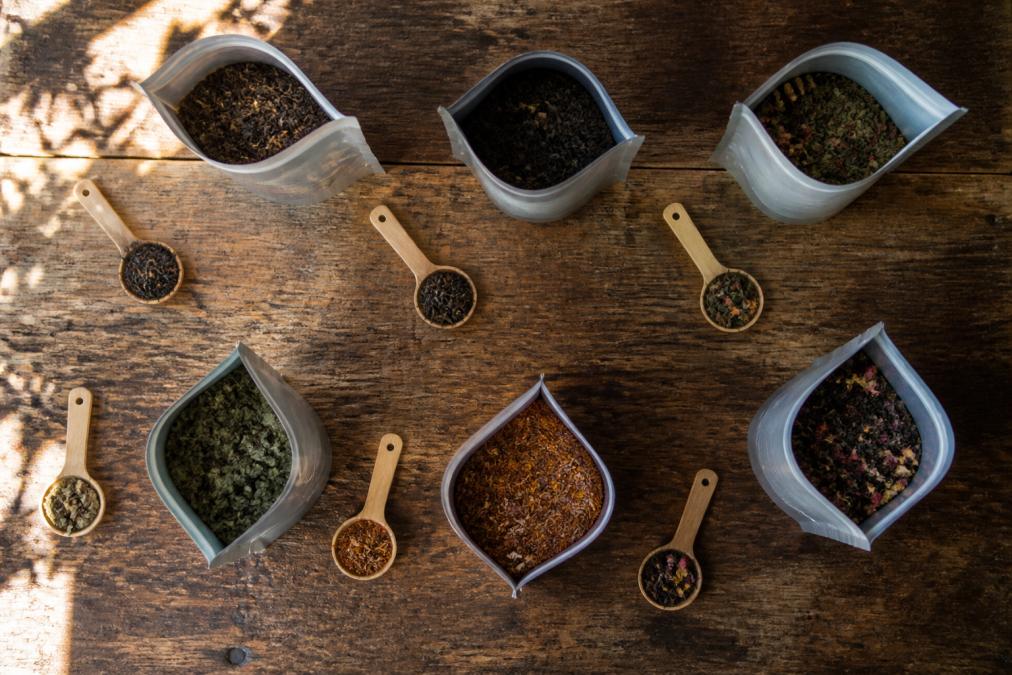
1. Jasmine Green Tea: The Floral Favorite
Jasmine green tea is the entry point for many drinkers who find plain green tea too vegetal. Hand-picked leaves are layered with freshly plucked jasmine blossoms at the precise moment the flowers release their fragrance, producing a medium-bodied cup that is sweet, smooth, and silky.

Steep 1 teaspoon (about 2.5 g) per 12 oz cup at 175-180 F for 2-3 minutes, and the leaves remain flavorful across multiple steepings, stretching the $14.98 price tag further than a single-use sachet. Tasting notes run to fresh jasmine blossom with a silky mouthfeel, and the caffeine content makes it a gentle afternoon pick-me-up.
Jasmine Green Tea, Loose Leaf 3 oz is our pick for anyone transitioning from bagged grocery store tea to the world of premium specialty blends.
2. Masala Chai Black Tea: Bold and Warming
Masala chai is not a subtle tea, and it should not try to be. This full-bodied, aromatic blend delivers warming cinnamon and clove notes layered over a strong black tea base that stands up to milk and sugar.

Simmer 1 teaspoon per 12 oz cup with milk and sugar for 4-5 minutes at 195-205 F, and you get a cup that tastes like it came from a street vendor in Mumbai rather than a tea bag. Drink it straight if you prefer, but the tea is engineered for the creamy, spiced preparation.
What makes this ethically sourced loose leaf tea a mission-driven standout is the giving model behind it. Every pouch of Masala Chai Black Tea, Loose Leaf 3 oz funds both animal rescue and meaningful employment for adults with intellectual disabilities, so your morning ritual supports two causes at once.
3. English Breakfast Black Tea: The Morning Staple
English Breakfast is the tea most Americans grew up on, but the commercial version bears little resemblance to what a proper blend can be. This version combines African and Indian black teas into a strong, rustic, sweet cup with malty notes and a brisk finish that cuts through milk and sugar.

The difference comes down to leaf quality. Whole loose leaf tea retains the essential oils and complex flavor compounds that get crushed out of mass-market fannings. Steep 1 teaspoon per 12 oz at 195-205 F for 4-5 minutes, and you will taste the gap immediately.
English Breakfast Black Tea, Loose Leaf 3 oz is the everyday workhorse of the lineup, priced at $14.98 for roughly 30-35 cups.
4. Hibiscus Berry Herbal Tea: Organic and Caffeine Free
Hibiscus berry is the tea that converts coffee drinkers. Organic hibiscus, rosehips, orange peel, and rooibos are blended with blueberry, passionfruit, and mango flavor to create a cup with low astringency, high body, and pronounced sweetness. The tart hibiscus note keeps it refreshing rather than cloying.
Because it is naturally caffeine free, this is the evening cup and iced tea pitcher staple. Steep 1 heaping teaspoon per 12 oz cup of boiling water for 5-7 minutes, then pour over ice or cold brew overnight. The flavor profile holds up cold in a way that delicate green teas cannot.
For anyone seeking an organic certified option that delivers on taste rather than just the label, Hibiscus Berry Herbal Tea, Loose Leaf 3 oz at $14.98 delivers the same 10% giving commitment as every other pouch in the catalog.
5. Hojicha Roasted Green Tea Powder: The Ceremonial Choice
Hojicha is green tea's roasted cousin, and the roasting changes everything. The leaves and stems are fired at high heat, turning them a deep amber-brown and producing a cup with comforting toasted-cereal notes and balanced umami. The roasting also reduces caffeine, making it a low-caffeine option that does not sacrifice complexity.
This is a tea powder, not a loose leaf, and the preparation differs accordingly. Sift 1-2 g into a bowl, add 2 oz of water at about 175 F, and whisk until frothy. For a latte, whisk with a splash of water first, then top with steamed milk. The fine stone-milled powder dissolves completely.
At $18.63, Hojicha Roasted Green Tea Powder, 3 oz offers a unique ceremonial experience for dedicated tea drinkers.
How to Brew Specialty Tea at Home for Best Flavor
Learning how to brew specialty tea at home is the single biggest upgrade you can make to your daily cup, and it directly amplifies the mission-driven value of your purchase. Every cup you brew correctly is a cup that does not get poured down the drain. The fundamentals are water temperature, leaf quantity, and steep time, and each tea type has an optimal range.
The most common mistake is treating all tea like black tea and pouring boiling water over everything. Delicate green teas like jasmine scorch at 212 F, turning bitter and astringent (teaclass.com). Use the temperature guide below as your starting point:
| Tea Type | Water Temp | Leaf per 12 oz | Steep Time | Re-steep? |
|---|---|---|---|---|
| Green tea (jasmine, mint) | 175-180 F | 1 tsp (2.5 g) | 2-3 min | Yes, 2-3 times |
| Black tea (English Breakfast, chai) | 195-205 F | 1 tsp (2.5 g) | 4-5 min | Once, weaker |
| Herbal tea (hibiscus, rooibos) | Boiling | 1 heaping tsp | 5-7 min | Once |
| Hojicha powder | 175 F | 1-2 g | Whisk to froth | No |
The Mission-Driven Case for Re-Steeping
Re-steeping is not just a cost-saving trick; it is a waste-reduction strategy. A 3 oz pouch yields roughly 30-35 cups on the first steep. Re-steeping a quality green tea can extend its use, potentially leading to fewer shipments and less packaging over time. For a mission-driven buyer, re-steeping can contribute to reducing the environmental impact of your tea habit.
The Under-Leafing Problem
The other common mistake is under-leafing. Most people use too little tea and then over-steep to compensate, producing a bitter, thin cup. Start with the recommended 2.5 g per 12 oz and adjust from there. If a tea tastes weak at the recommended leaf amount, the problem is the leaf, not your technique.
Freshness and Storage: Protecting Your Investment
Freshness matters as much as technique. Unlike shelf-stable tea bags that can sit in a warehouse for years, specialty tea should be consumed within months of harvest or roasting. The resealable pouches protect the leaves from oxygen and moisture, but do not buy more than you will drink in a few months. Storing tea properly protects the flavor compounds that justify the premium price.
The Equipment Question
A simple gooseneck kettle with temperature control removes the guesswork, but a standard kettle and a thermometer work fine. Weigh your leaves if you have a scale; volume measurements vary with leaf size and density. A temperature-control kettle can help with consistency in your daily cup.
Frequently Asked Questions
What makes a tea brand 'mission-driven'?
A mission driven tea brand ties every purchase to a social or environmental cause rather than just selling a product. Paws and Promise Coffee donates 10% of every order, split evenly between Forever Paws Animal Shelter in Fall River and Sweet Inspirations in Milford, a nonprofit creating jobs for adults with intellectual disabilities. That structure means your buying decision directly funds animal rescue and meaningful employment. Before choosing a brand, check whether the donation model is transparent, where the money goes, and how the company sources its leaves.
How can I verify if a tea company is ethically sourced?
Look for specific sourcing claims rather than vague marketing language. Ask whether the company names its tea estates or regions, whether it holds organic certification, and whether it uses direct trade relationships. Paws and Promise Coffee publishes the origin and character of each ethically sourced loose leaf tea, from Ceylon black tea in the Earl Grey to rooibos from South Africa in the Apple Cider blend. A brand that cannot explain where its leaves come from or how farmers are paid is likely not practicing ethical sourcing.
What are the benefits of buying loose leaf specialty tea online?
Loose leaf tea uses whole leaves and blossoms, which retain more essential oils and flavor than the broken leaves found in most sachets. That translates to a sweeter, more complex cup that also rewards multiple steepings. Buying specialty tea online gives you access to small-batch blends, single origin lots, and transparent sourcing details you rarely find on a grocery shelf. At Paws and Promise Coffee, each 3 oz pouch brews roughly 30 to 35 cups, and every order supports animal rescue and disability employment.
Are there tea companies that support animal shelters or disability employment?
Yes. Paws and Promise Coffee was built around this exact model. Ten percent of every order is donated to two Massachusetts causes: Forever Paws Animal Shelter and Sweet Inspirations' supportive employment programs in Milford, MA, a nonprofit that provides supportive employment for adults with intellectual disabilities. Every loose leaf tea pouch, from Jasmine Green to Masala Chai, carries the same giving structure, so your purchase consistently funds both animal care and meaningful work.
How does fair trade certification impact the quality of specialty tea?
Fair trade certification focuses on minimum pricing and labor standards, which supports farming communities but does not by itself guarantee a better tasting leaf. Quality in specialty tea comes from cultivation practices, harvest timing, and processing skill. The most reliable approach is to buy from sellers who name their tea estates and describe their sourcing relationships. That direct transparency, combined with organic certification where applicable, gives you a clearer picture of both ethics and flavor than a single fair trade label alone.