

Table of Contents
- What Makes a Coffee Brand Truly Charitable?
- How to Support Local Animal Rescues Through Your Coffee
- Ethical Coffee Brands for Disability Employment Programs
- How to Verify a Coffee Brand's Charitable Claims
- Subscription vs. One-Time Purchase: Which Creates More Impact?
- Price-to-Impact Ratio: Getting the Most Good per Dollar
- Frequently Asked Questions
Last Updated: September 14, 2026
What Makes a Coffee Brand Truly Charitable?
A charitable coffee brand is one that commits a defined portion of every sale to a named cause, then shows you where the money went. Paws and Promise Coffee, for example, donates 10% of every order to Forever Paws Animal Shelter and Sweet Inspirations in Milford, a nonprofit creating jobs for adults with intellectual disabilities.
That split matters because it names two specific recipients instead of a vague promise to "give back." When you're hunting for charitable coffee brands to support, the first question isn't how much they donate. It's whether you can verify it.
Fair Trade vs. Direct Trade vs. Charitable Giving
These three terms get used interchangeably, and they shouldn't be.
Fair trade is a certification system. A third-party certifier audits growers and cooperatives against social and environmental standards, and producers receive a minimum price floor. Direct trade skips the certifier: a roaster buys straight from a farm or cooperative, usually at a premium, and visits or maintains a direct relationship. Charitable giving is separate from both. It's what the roaster does with its revenue after the sale, not how it sourced the beans.
A bag can be fair trade certified and donate nothing. Another can skip certification entirely and fund a shelter with every order. Neither is automatically better; they're answering different questions. Look for Fair Trade Certified's standards overview if you want to understand what certification actually guarantees, and check whether the roaster publishes sourcing details alongside its donation claims.
How to Support Local Animal Rescues Through Your Coffee
The most direct route is buying from a roaster that names a specific shelter and a specific percentage. Generic "a portion of proceeds" language tells you nothing about where the money lands.
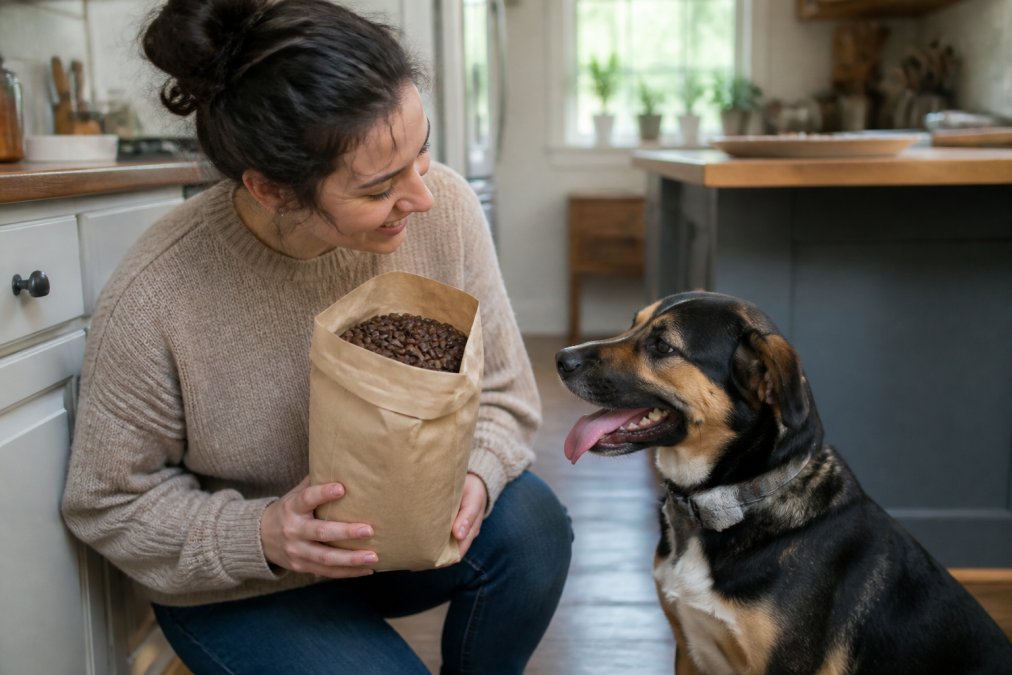
Here's how to make your coffee habit count for animals:
- Check the recipient is named. "Forever Paws Animal Shelter" is verifiable. "Local animal charities" is not.
- Look for a fixed percentage. 10% of every order is a commitment. "A portion" is a marketing phrase.
- Confirm the split if there are multiple causes. Paws and Promise Coffee divides its 10% evenly, 5% to the shelter and 5% to the employment program, so you know exactly where each dollar goes.
- Buy in a size that fits your routine. A 12 oz bag, a 1 lb bag, or a 5 lb bag all carry the same donation rate.
- Repeat the purchase. A one-time bag helps once. A standing order helps every month.
The ASPCA's guidance on supporting animal welfare is a useful starting point if you want to understand what shelters typically need most.
Ethical Coffee Brands for Disability Employment Programs
Coffee companies that fund disability employment usually partner with a nonprofit rather than running the program themselves. That partnership is the thing to scrutinize.
Paws and Promise Coffee donates 10% of all sales to support Sweet Inspirations in Milford, a nonprofit that creates meaningful jobs for adults with intellectual disabilities, and Forever Paws Animal Shelter. Two causes, one purchase, and both recipients named on the product page.
What separates a genuine program from a marketing line:
- The nonprofit partner is named and independently searchable
- The donation percentage is fixed and stated plainly
- The cause is described in specific terms, not as "inclusion" in the abstract
- The brand doesn't claim to run the program itself unless it does
For context on how supported employment is structured, the U.S. Department of Labor's disability employment resources explains the difference between competitive integrated employment and sheltered work, which is worth knowing before you evaluate any brand's claim.
How to Verify a Coffee Brand's Charitable Claims
Verification is the step almost everyone skips, and it's the one that separates real charitable coffee from greenwashing. A 2026 purchase decision comes down to four checks:
| What to Check | Red Flag | What Good Looks Like |
|---|---|---|
| Recipient named | "Various charities" | Named shelter and named nonprofit |
| Donation amount | "A portion of proceeds" | Fixed percentage, stated publicly |
| Timing | "We plan to donate" | Donated per order or per period |
| Proof | No updates ever | Order confirmations, annual summaries, partner acknowledgment |
Run those four checks and you'll filter out most of the noise in about five minutes. But the four checks only tell you what the brand says. To confirm the money actually moved, you need to look outside the brand's own website.
Reading an Impact Report Without Getting Fooled
An impact report is only useful if it answers three questions: how much, to whom, and when. Most coffee brands publish a paragraph and a photo. A report worth trusting includes:
- A dollar figure or a unit count, not just a percentage. "We donated $18,400 across 2025" is verifiable. "We give back" is not.
- The recipient's legal name, so you can look it up. "Forever Paws Animal Shelter" is searchable. "Local rescues" is not.
- A time period. A one-time donation in 2021 does not describe a current program.
- A reconciliation between the percentage promised and the total given. If a brand says 10% of every order and reports $18,400 donated, you can sanity-check that against its stated order volume.
If a brand publishes no report at all, that is itself information. Ask for one directly. A brand with nothing to hide answers in one email.
The Public Records Check Most Buyers Never Run
Nonprofits in the United States generally must file IRS Form 990 each year, and those filings are public. That gives you a way to confirm a claimed partnership from the receiving end rather than the giving end.
Here's the sequence:
- Get the nonprofit's legal name from the coffee brand's site, not the nickname, the full legal name.
- Look up the nonprofit's 990 through a public charity database or the IRS's own search tools.
- Check the contribution lines. A recurring corporate donor usually shows up as a consistent contribution across years. A one-time gift shows up once.
- Check the nonprofit's own website and social channels for a donor acknowledgment. Many shelters and employment nonprofits list corporate partners by name.
You will not always find a match, small donations fall below reporting thresholds, and some nonprofits report contributions in aggregate. But the absence of any trace across multiple years, combined with a brand that claims a long-running partnership, is a red flag worth taking seriously.
Geographic Focus: Where the Money Actually Lands
Two brands can both donate 10% and still send your money to very different places. Before you buy, decide which of these you actually want to fund:
- Local community, a shelter, food bank, or employment program in the brand's own region. The money stays near where the coffee is roasted and sold.
- Coffee-growing origin, programs in the countries where the beans are grown, such as school or water projects in farming communities. The money follows the supply chain.
- National or issue-based, a large nonprofit working on a single cause across many regions.
None of these is better than the others, but they are not interchangeable. A buyer who wants their dollars to stay in their own county will be disappointed by an origin-country program, and vice versa. The brand's product page should tell you which one it is. If it doesn't, that's the first question to ask.
Impact Reporting and Traceability
Traceability means you can follow a dollar from your cart to the cause. Most coffee brands don't offer it, which is exactly why it's worth asking for.
The practical version: does the brand tell you the split (5% here, 5% there), name both recipients, and let the nonprofit confirm the relationship? If the shelter or program publicly acknowledges the brand as a donor, you've got independent confirmation rather than a self-reported claim.
Ask directly. A brand with nothing to hide answers in one email.
Subscription vs. One-Time Purchase: Which Creates More Impact?
A subscription creates more total impact than a one-time purchase, for the simple reason that a fixed percentage of every order compounds. If you drink coffee weekly, a recurring order donates every week instead of once.
That said, subscriptions aren't right for everyone. If you drink slowly, a large bag can go stale before you finish it, and stale coffee helps nobody. Match the order size to your actual consumption:
- Daily drinker: a 1 lb or 2 lb bag on a recurring schedule
- Weekend drinker: a 12 oz bag, replaced as needed
- Office or shared kitchen: a 5 lb bag, which spreads the donation across more cups
The donation rate stays the same either way. The variable is how often you buy.
Price-to-Impact Ratio: Getting the Most Good per Dollar
Price-to-impact ratio is the donation percentage divided by what you actually pay, and it's the metric most buyers never calculate.
The math is simple. A bag priced at $20.10 with a 10% donation sends $2.01 to the causes. A $39.99 gift set sends $4.00. If your goal is maximum good per dollar, the percentage is what matters, not the price tag. A higher-priced bag with a 2% donation sends less than a cheaper bag at 10%.
Where this gets interesting is the gift set. The Daily Brew Starter Pack at $39.99 pairs a 12 oz bag of Breakfast Blend with an 11 oz ceramic mug, and the donation applies to the whole order. You're not paying extra for the mug; you're buying a gift that carries the same 10% rate as everything else on the site.

Three things to weigh before you buy:
- Percentage over price. 10% of $20 beats 2% of $60.
- Bundle value. Gift sets concentrate the donation into one purchase, useful if you're buying for someone else.
- Shipping. Free U.S. shipping means the full purchase price is working, not eaten by delivery fees.
For anyone comparing charitable coffee brands on value rather than marketing, that's the whole calculation.
Choosing where your coffee money goes is a small decision you make dozens of times a year, and it adds up faster than most people expect. Paws and Promise Coffee roasts every order to ship fresh, sources ethically, and donates 10% of every sale to two named causes: Forever Paws Animal Shelter and Sweet Inspirations' employment programs for adults with intellectual disabilities. If you want your morning cup to do something beyond caffeine, start with The Daily Brew Starter Pack and see how easy the switch is.
Frequently Asked Questions
What are some charitable coffee brands to support?
Look for brands that donate a fixed percentage of every sale to specific nonprofits. Paws and Promise Coffee donates 10% of all orders to Forever Paws Animal Shelter and Sweet Inspirations in Milford, which creates jobs for adults with intellectual disabilities. Other brands may support food security, environmental conservation, or veteran programs. The key is choosing a brand whose mission aligns with your values and that publishes clear donation details.
How can I verify if a coffee brand is truly charitable?
Check the brand's website for specific donation percentages and named nonprofit partners. Look for impact reports, receipts, or partner logos. A trustworthy brand will tell you exactly where the money goes and how much is donated. Paws and Promise Coffee, for example, states that 10% of every order is split between two Massachusetts causes and provides details about each partner. If a brand is vague about amounts or recipients, treat the claims with caution.
Are there coffee brands that support disability employment programs?
Yes. Some coffee companies partner with nonprofits that create jobs for adults with intellectual disabilities. Paws and Promise Coffee donates 5% of every order to Sweet Inspirations in Milford, a nonprofit that provides meaningful employment for adults with intellectual disabilities. When evaluating brands, look for explicit partnerships with employment-focused organizations and ask how the funds are used, such as job training, wages, or program expansion.
What is the difference between fair trade and charitable coffee brands?
Fair trade certification focuses on equitable treatment of farmers, ensuring fair prices, safe working conditions, and sustainable practices. Charitable coffee brands go further by donating a portion of sales to specific causes, such as animal rescues or disability employment. A brand can be both fair trade and charitable, but they are separate commitments. Paws and Promise Coffee emphasizes ethical sourcing and donates 10% of every order to local nonprofits, combining responsible sourcing with direct community impact.
How do I choose between a subscription and a one-time coffee purchase for charitable impact?
A subscription creates recurring donations because each order triggers a new contribution. One-time purchases give a single donation but offer flexibility. If you want consistent support for a cause, a subscription to a charitable coffee brand maximizes your impact over time. For occasional gifts or trying a new roast, a one-time purchase still contributes. Paws and Promise Coffee offers both options, and every order donates 10% to Forever Paws Animal Shelter and Sweet Inspirations.