

Table of Contents
- What Does Ethically Sourced Coffee Actually Mean?
- Fair Trade Coffee Certification: What It Covers and What It Misses
- Direct Trade Coffee Benefits and Its Verification Gap
- Coffee Supply Chain Transparency: Questions Every Brand Should Answer
- How to Read Coffee Labels Without Getting Fooled
- The Cost of Ethics: What You're Paying For
- Your Ethical Coffee Checklist: Put It Into Practice
- Frequently Asked Questions
Last Updated: September 7, 2026
What Does Ethically Sourced Coffee Actually Mean?
Ethically sourced coffee is coffee purchased through a supply chain that prioritizes fair wages for farmers, safe labor conditions, and environmentally sustainable farming practices. It moves beyond the commodity market toward a model where roasters pay farmer-paid prices that reflect the true cost of cultivation.
The challenge is that "ethical" isn't a legally regulated term. Unlike organic certification, which has USDA-defined standards, the phrase can appear on any bag without third-party verification. Understanding the mechanisms behind the label matters more than the label itself.
Fair Trade Coffee Certification: What It Covers and What It Misses
Fair trade coffee certification is the most recognized ethical label in the industry, establishing a minimum price floor and requiring democratic cooperatives. When you see the Fairtrade International mark, it signals that farmers received at least the fair trade minimum price, plus a premium for community development projects. This system has helped millions of coffee farmers access global markets they couldn't reach individually.
However, certification has real limitations that conscious consumers should understand. The minimum price floor often sits close to production costs, leaving little margin for farm improvements. Smallholder farmers must also pay certification fees and meet administrative requirements that can be burdensome. As documented by Fairtrade International's producer standards, certification audits verify compliance, but they don't guarantee farmers earn a living wage above subsistence level.
The system also misses the roughly 60 percent of coffee grown by smallholders who lack cooperative membership. These farmers sell to local middlemen and never access certified supply chains. This gap has fueled the rise of direct trade relationships.
Direct Trade Coffee Benefits and Its Verification Gap
Direct trade coffee benefits include higher farmer-paid prices, long-term relationships, and quality incentives that certification alone doesn't provide. In a direct trade model, roasters visit farms, build personal relationships, and pay premiums often exceeding fair trade minimums. This approach rewards quality directly: farmers who invest in processing and cultivation receive better prices for better beans.
Unlike certification programs, direct trade has no third-party auditor confirming that promised premiums actually reach farmers. The term operates on trust, creating room for greenwashing.
A roaster can claim direct trade while paying only marginally above commodity prices. When you encounter a direct trade claim, ask for specifics: farm names, prices paid above the commodity market, and the length of their relationships. Committed roasters will have detailed answers.
The Verification Toolkit: How to Check a Direct Trade Claim
Most consumers ask "Is this direct trade?" The more useful question is "Can you prove it?" Here is a practical verification sequence to run before buying:
-
Request the farm name and visit date. A roaster practicing genuine direct trade will have visited within the last 12 to 18 months and can name the specific farm or cooperative. Vague answers like "our partner farms in Central America" signal a marketing claim rather than a relationship.
-
Ask for the price differential in writing. Direct trade roasters typically pay a premium above the commodity "C" price. The Specialty Coffee Association publishes an annual Coffee Price Transparency report that tracks average FOB prices by origin. If a roaster claims direct trade but cannot state a specific price per pound above the C market, the claim lacks substance.
-
Cross-check with the importer. Many direct trade relationships run through specialty importers like Royal Coffee, Cafe Imports, or Ally Coffee. These importers publish detailed traceability documents that name farms, altitudes, and prices paid. Ask the roaster which importer they use, then verify the farm appears in that importer's public catalog.
-
Look for published price transparency. A growing number of roasters publish what they pay for green coffee on their websites. Brands like Counter Culture Coffee and Onyx Coffee Lab have shared their FOB price data publicly. If a roaster claims direct trade but has never published a single price figure, treat the claim with skepticism.
-
Ask about the relationship's duration. Direct trade is built on multi-year commitments. A roaster who has worked with the same farm for three or more harvests can speak to specific improvements they funded, such as new drying beds or fermentation tanks. One-off purchases at premium prices are not direct trade; they are spot purchases with a marketing label.
The Greenwashing Red Flags Specific to Direct Trade
Direct trade's lack of regulation creates predictable patterns of misuse. Watch for these specific signals:
-
The "we pay above fair trade" claim without numbers. Fair trade minimums are public information. If a roaster says they pay more but won't say how much more, they likely are not paying meaningfully above the floor.
-
Farm photos without farm names. Marketing materials featuring smiling farmers are not transparency. Genuine direct trade roasters name their partners because the relationship is the product.
-
Vague origin descriptors. "Single origin" and "estate grown" are not direct trade claims. Direct trade requires a named relationship, not a geographic region.

Colombia Single Origin Coffee -
No response to direct questions. Send an email asking for the farm name and price paid. Ethical roasters answer these questions routinely. Silence is the loudest red flag.
When Direct Trade Falls Short
Direct trade also has structural limitations. It typically benefits larger farms that can produce export-quality lots consistently. Smallholders who cannot meet volume or quality thresholds remain excluded. Additionally, direct trade agreements are informal; if the roaster changes buyers or the farm has a bad harvest, the relationship can dissolve without the safety net that cooperative membership provides.
Direct trade and certification are not either-or choices. Many roasters use both: certifications for baseline standards, and direct trade for quality premiums and long-term investment. The verification toolkit above works for both models because it asks one question: can this roaster prove what they claim?
Coffee Supply Chain Transparency: Questions Every Brand Should Answer
Coffee supply chain transparency means a roaster can trace each batch of beans back to the specific farm or cooperative that grew them. This traceability is the foundation of ethical sourcing because it creates accountability, allowing a roaster to verify labor practices, environmental stewardship, and payment amounts.
Every brand claiming ethical practices should answer these questions clearly:
- Which farms or cooperatives supply your coffee, and can you name them?
- What price do you pay above the commodity market, and how is that calculated?
- Do you visit your origin farms, and how often?
- How do you verify labor conditions and environmental practices at origin?
- What third-party certifications or audits back your claims?
If a brand hesitates on any of these, ethical sourcing may be more marketing than practice. The Specialty Coffee Association's transparency resources offer guidance on what meaningful supply chain disclosure looks like in the specialty industry.
How to Read Coffee Labels Without Getting Fooled
Reading coffee labels requires distinguishing between regulated certifications and unregulated marketing language. Certified terms like USDA Organic, Fair Trade, and Rainforest Alliance have documented standards and audits. Unregulated terms like "ethically sourced," "sustainably grown," and "responsibly traded" carry no legal definition.
Look for origin-specific information rather than vague claims. A bag that names the country, region, and ideally the farm or cooperative demonstrates traceability. Shade-grown and bird friendly certifications indicate biodiversity-preserving cultivation methods.
The absence of certifications doesn't automatically mean unethical sourcing. Many exceptional small roasters use direct trade relationships that exceed certification standards but lack the administrative resources for third-party audits. The key is whether the roaster can provide evidence for their claims.
The Anatomy of a Coffee Label: What Each Element Actually Tells You
A coffee bag typically carries five information zones. Here is how to read each one:
1. The Certification Seals. These are the only elements with third-party verification behind them. Each seal has a public database you can check:
-
USDA Organic: Verify the certifier and the farm's certificate number through the USDA Organic Integrity Database. This database lets you search by operation name or certificate number to confirm active certification status.
-
Fair Trade: The Fairtrade International mark includes a producer organization code. You can search certified producer organizations on the Fairtrade International producer database.
-
Rainforest Alliance: The green frog seal now includes a QR code that links to the certification's scope. You can also search the Rainforest Alliance certified operations database by operation name or certificate number.
-
Bird Friendly: Administered by the Smithsonian Migratory Bird Center, this certification requires organic certification plus verified shade canopy coverage of at least 40 percent. The Smithsonian maintains a list of certified farms and roasters.
2. The Origin Statement. Look for decreasing levels of vagueness. The most traceable bags name a country, region, farm or cooperative, and sometimes even the specific micro-lot. A bag that says only "Arabica blend" or "South American" offers no traceability; one that names "Finca El Injerto, Huehuetenango, Guatemala" offers a verifiable supply chain.

3. The Roast Date. Ethical roasters print a roast date, not just a "best by" date. Freshness indicates the roaster's investment in quality, which correlates with their willingness to pay farmers properly. No roast date often signals commodity-grade sourcing.
4. The Price Point. Price is a signal, not proof. A $6 bag cannot cover production costs plus fair wages plus roaster margin. A $20 bag can, but only if the roaster chooses to allocate the margin ethically. Price tells you what to investigate, not what to conclude.
5. The Marketing Language. Terms like "ethically sourced," "responsibly grown," "sustainably harvested," and "farmer-friendly" have no legal definition. They are adjectives, not certifications, invitations to ask questions, not evidence of ethical practice.
The Label Verification Workflow
When you pick up a bag, run this sequence in under two minutes:
- Scan for certification seals. If present, note the certifier and any certificate number or QR code.
- Check the origin specificity. Country only? Region? Named farm? The more specific, the more traceable.
- Look for a roast date. Freshness indicates quality investment.
- Read the back label for sourcing claims. Does it name an importer or a direct trade partner?
- Search the roaster's website on your phone. Do they publish prices paid or farm names? If the bag makes claims the website cannot substantiate, the claims are marketing.
The "Certified Organic" Trap
Organic certification verifies farming practices, not labor conditions or farmer wages. A coffee can be USDA Organic and still be grown by underpaid workers on an industrial monoculture farm. Conversely, a smallholder using traditional shade-grown methods may not afford organic certification but may farm more sustainably. Organic is one dimension of ethics, not the whole picture.
The Label Reading Cheat Sheet
| Label Element | What It Verifies | What It Does Not Verify |
|---|---|---|
| USDA Organic | No synthetic pesticides or fertilizers | Labor conditions, farmer wages |
| Fair Trade | Minimum price floor, cooperative structure | Living wage, environmental practices |
| Rainforest Alliance | Environmental and social criteria | Price paid to farmers |
| Bird Friendly | Shade canopy, organic practices | Farmer compensation |
| "Direct Trade" (unregulated) | Nothing, unless verified | Everything, unless the roaster publishes evidence |
| "Ethically Sourced" (unregulated) | Nothing | Everything |
This cheat sheet distills the core skill: separating verified claims from aspirational language. The most ethical roasters often carry fewer certifications but publish more evidence; the least ethical carry the most adjectives and the fewest specifics.
The Cost of Ethics: What You're Paying For
Ethically sourced coffee costs more because the price reflects actual production costs and fair compensation. When you pay $20 for a bag of single-origin coffee, you're covering the farmer's harvest costs, processing, export fees, and a margin that supports their livelihood. Commodity prices often fall below production costs, forcing farmers to absorb losses or cut corners.

This cost breakdown explains why the cheapest coffee often carries hidden ethical costs. A $6 bag of commodity coffee likely means the farmer received far less than the cost of production. Specialty roasters who prioritize ethics typically pay 2 to 4 times the commodity price to farmers.
For mission-driven roasters, the cost also includes charitable giving. Paws and Promise Coffee donates 10 percent of every sale to support the Forever Paws Animal Shelter and Sweet Inspirations' employment programs in Milford, MA. Your purchase supports rescue animals and provides meaningful work for adults with intellectual disabilities, in addition to supporting farmers through ethical sourcing.
Your Ethical Coffee Checklist: Put It Into Practice
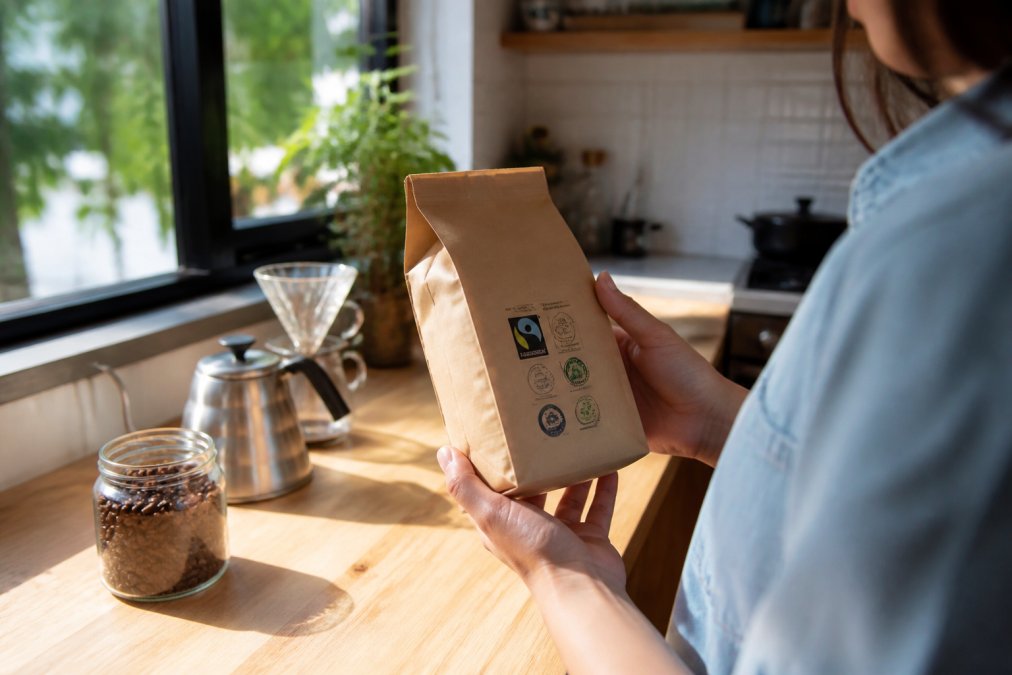
Use this checklist when evaluating any coffee brand to identify ethically sourced options:
- Does the bag name specific farms, cooperatives, or regions?
- What third-party certifications does the brand hold, if any?
- Can the roaster explain how farmers are paid above commodity prices?
- Does the brand publish supply chain information on its website?
- Are environmental practices like shade-grown cultivation or water conservation documented?
- Does the brand have a clear social mission beyond selling coffee?
Brands that pass this checklist demonstrate genuine commitment rather than marketing convenience. When you find one, support them consistently. The USDA's organic agriculture resources can help you verify what organic claims actually require, and the Rainforest Alliance certification standards explain what their seal covers.
Ethically sourced coffee isn't a single certification or a marketing phrase. It's a supply chain built on transparency, fair compensation, and environmental stewardship. By asking the right questions and supporting roasters who provide verifiable answers, you transform your daily cup into a force for economic equity and sustainable agriculture.
Frequently Asked Questions
What certifications should I look for on coffee packaging?
Look for third-party certifications like Fair Trade, Rainforest Alliance, USDA Organic, and Bird Friendly. Each verifies different standards: Fair Trade focuses on farmer wages, Rainforest Alliance covers environmental and social criteria, and Bird Friendly confirms shade-grown cultivation. No single label covers everything, so check which combination a brand carries. The absence of any third-party certification does not automatically mean the coffee is unethical, but it means the brand's claims are unverified.
What is the difference between direct trade and fair trade coffee?
Fair Trade is a third-party certification with audited standards for minimum prices and farmer premiums. Direct Trade is an informal practice where roasters buy straight from farms, often paying above Fair Trade prices, but it has no governing body or universal definition. Direct trade can mean stronger relationships and better quality, but you must verify the roaster's claims about farmer-paid prices. Ask the company about its specific sourcing relationships and whether it publishes its pricing structure.
How can I verify a coffee brand's supply chain transparency?
Check the brand's website for specific origin details: farm or cooperative names, regions, and altitudes. Look for published sourcing reports, supply chain audit results, or third-party verification. Ask direct questions about farmer-paid prices and how they compare to Fair Trade minimums. Brands practicing genuine transparency share this information openly. A brand that only uses vague terms like 'ethically sourced' without specifics may be greenwashing. Traceability to a named farm or cooperative is the strongest signal.
Choosing coffee that aligns with your values takes a few extra minutes of research, but the impact lasts for seasons. At Paws and Promise Coffee, every single-origin offering from Bali Blue to Colombia is roasted to order for freshness and sourced through relationships we can document. Each bag also gives 10 percent back to animal rescue and supportive employment programs. Explore our ethically sourced single-origin coffees and taste the difference that transparency makes.