

Table of Contents
- Do Coffee Pods Taste Like Fresh Beans?
- Why Coffee Pods Lose Flavor: The Science of Oxidation and Degassing
- The Impact of Roast Date on Coffee Quality
- Fresh Beans vs. Pre-Packaged Pods: A Direct Comparison
- How to Store Fresh Roasted Coffee for Maximum Freshness
- Benefits of Freshly Ground Coffee and When Pods Make Sense
- Cost-Per-Cup Analysis: Fresh Beans vs. Pods
- Choosing Pods That Taste Closer to Fresh: What Actually Works
- Frequently Asked Questions
Last Updated: September 27, 2026
Do Coffee Pods Taste Like Fresh Beans?
The short answer to whether do coffee pods taste like fresh beans is no, they rarely taste identical to freshly roasted whole beans. But the gap is narrower than many assume, and for busy professionals, the trade-off might be worth it.
Here's what matters. Coffee pods contain ground coffee sealed in a capsule, usually with nitrogen to slow oxidation. Fresh whole beans stay fresher longer because their larger surface area means slower exposure to oxygen. Once you grind beans, you've accelerated the clock on flavor loss. Pods are pre-ground, so they're already partway through that degradation before they reach you.
The real question isn't whether pods taste fresh. It's whether they taste good enough for your routine, and whether the convenience justifies the flavor compromise. At Paws and Promise Coffee, we've spent time understanding both sides of this debate, and the science behind why the difference exists in the first place.

Below, we'll walk you through the chemistry of flavor loss, how to pick pods that perform best, and when pods actually make sense versus brewing from whole beans.
Why Coffee Pods Lose Flavor: The Science of Oxidation and Degassing
Coffee's flavor comes from volatile aromatic compounds, the delicate molecules that give coffee its brightness, sweetness, and complexity. These compounds begin escaping the moment coffee is roasted. Oxygen accelerates the process.
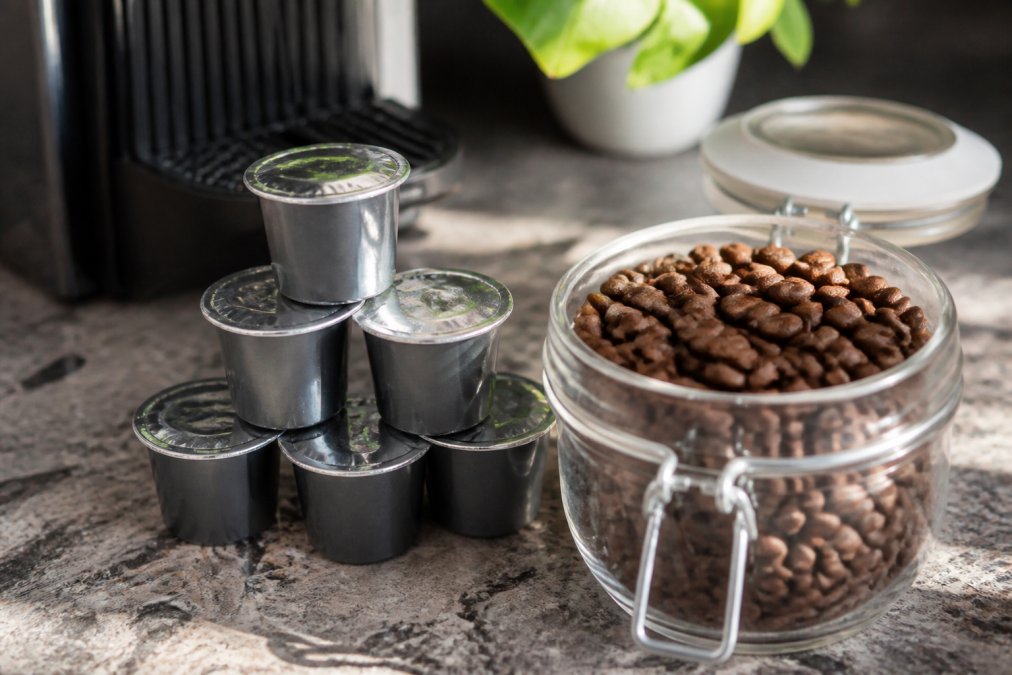
How Volatile Aromatic Compounds Escape Over Time
When coffee is roasted, it releases CO2, a process called degassing. That's why fresh-roasted beans feel slightly puffy in the bag. Over days and weeks, those aromatic compounds oxidize and degrade. Ground coffee loses these compounds faster than whole beans because grinding increases surface area exposed to oxygen.
A pod's hermetic seal slows this process, but it doesn't stop it. Nitrogen flushing, injecting inert nitrogen gas into the capsule to displace oxygen, extends shelf life significantly. Without it, pods lose noticeable flavor within weeks. With it, they can stay relatively fresh for months.
The catch: even with nitrogen sealing, pre-ground coffee in a pod will taste flatter than whole beans ground fresh. You're comparing a snapshot taken weeks ago to one taken minutes before brewing.
The Role of Nitrogen Sealing in Preservation
Not all pods are sealed equally. Cheap pods may have minimal nitrogen flushing or no sealing at all. Premium pods invest in better capsule design and nitrogen ratios.
Paws and Promise Coffee's single-serve capsules use nitrogen sealing with no oxygen inside, a significant step above basic pods. The improved filter design also matters. A better filter absorbs more grounds during extraction, pulling out more flavor compounds and producing what we call a livelier cup. This doesn't replace fresh beans, but it narrows the gap.

The real test: if you're comparing a nitrogen-sealed pod from a quality roaster against a bag of whole beans that's been open in your cabinet for two weeks, the pod might actually win on flavor. Oxidation in an open bag is brutal.
The Impact of Roast Date on Coffee Quality
The roast date is the single most important number on a coffee bag. Coffee is freshest 5-10 days after roasting, when volatile compounds are still abundant and the roast's character is fully developed.
After 30 days, flavor noticeably flattens. After 60 days, the coffee tastes stale, bitter, thin, or muted. This timeline applies to whole beans stored properly. For ground coffee in pods, the window is tighter because surface area accelerates oxidation.
When you buy pods, you're usually buying coffee that was roasted and ground weeks or months before it arrives. Unless the roaster prints the roast date on the package, and actually roasts frequently, you have no way to know how old the coffee is. Many commercial pods don't list roast dates at all.
Paws and Promise Coffee roasts to order, which means your beans are roasted after you place your order, not sitting in inventory. That's a meaningful difference if freshness is your priority. For pods, this approach helps compress the time between roasting and packaging, preserving more of those volatile compounds.
Fresh Beans vs. Pre-Packaged Pods: A Direct Comparison
The flavor difference between fresh whole beans and pods comes down to a few variables: roast date, grind size, oxidation, and extraction method.
Original Roast Single Serve Coffee →
Extraction Yield and Pressure Profile Differences
Whole beans ground at home let you control grind size precisely. A burr grinder can dial in the exact particle size your brewing method needs. Pods come pre-ground to a generic size that works "okay" for most Keurig-style brewers but isn't optimized for any specific extraction profile.
Espresso machines apply intense pressure, 9 bars, to force water through grounds. Drip machines use gravity. Single-serve brewers use moderate pressure and hot water. Pre-ground coffee in pods is engineered as a compromise. It won't extract as efficiently as freshly ground beans tailored to your specific brewing pressure.
That said, pods do deliver consistent extraction because the capsule design controls water flow.
Flavor Profile, Acidity, and Body
Fresh whole beans deliver brighter acidity and more complex flavor notes. You taste the origin, the terroir, the altitude, the processing method. Single-origin beans from specific regions (like Peru or Mexico) shine when they're fresh because you can detect subtle notes of citrus, chocolate, caramel, or fruit.
| Characteristic | Fresh Whole Beans | Quality Pods | Budget Pods |
|---|---|---|---|
| Acidity | Bright, complex | Muted | Flat |
| Flavor notes | Clear, distinct | Subdued | Barely detectable |
| Body | Full, varied | Medium | Thin |
| Oxidation risk | Low (if stored well) | Minimal (sealed) | High (poor sealing) |
| Roast date visibility | Usually printed | Sometimes printed | Rarely printed |
| Cost per cup | $0.30-$0.60 | $0.60-$1.20 | $0.40-$0.80 |
How to Store Fresh Roasted Coffee for Maximum Freshness
If you choose whole beans, storage is everything. Oxygen, light, heat, and humidity all degrade coffee.
Benefits of Freshly Ground Coffee and When Pods Make Sense
Freshly ground whole beans taste better. Period. The flavor is brighter, more complex, and more rewarding. If you have 5 minutes for morning coffee, grinding whole beans is worth it.
Pods make sense if you:
- Work long hours and need reliable coffee without ritual
- Travel or work from multiple locations
- Want zero cleanup and minimal effort
- Prioritize consistency over peak flavor
- Can't store whole beans properly (no cool, dark space)
Pods don't make sense if you:
- Have time for the grinding ritual
- Want to explore single-origin coffees and taste their unique notes
- Are willing to invest in a quality grinder
- Have proper storage space
- Taste coffee critically and notice flavor loss
Cost-Per-Cup Analysis: Fresh Beans vs. Pods
Whole beans cost less per cup when you do the math, but the calculation changes based on your habits.
Choosing Pods That Taste Closer to Fresh: What Actually Works
If you decide pods are right for you, here's how to pick ones that taste better.
Frequently Asked Questions
Is there a noticeable difference between pod coffee and freshly ground beans?
Yes, there is typically a noticeable difference. Fresh beans retain volatile aromatic compounds that give coffee its complex flavor profile, acidity, and body. Pods lose these compounds over time through oxidation and degassing, even with nitrogen sealing. The difference is most pronounced within the first 2-4 weeks after roasting. However, high-quality pods sealed immediately after roasting, like those from Paws and Promise Coffee, can deliver a cup that rivals fresh beans in taste, especially when brewed at the correct temperature and pressure.
How long does coffee stay fresh inside a sealed pod?
Nitrogen-sealed pods maintain freshness longer than unsealed coffee, typically staying fresh for 3-6 months when stored properly in a cool, dark place. However, the best flavor window is within 2-4 weeks of the roast date. After that, volatile aromatic compounds continue to degrade, resulting in a flatter, less vibrant cup. Check the roast date on your pods, this matters more than the packaging date.
Does the roasting date affect the flavor profile of coffee pods?
Absolutely. The roast date is one of the most important factors in pod coffee quality. Coffee roasted more recently has higher concentrations of volatile aromatic compounds, which create complexity, brightness, and the full flavor profile you taste. Pods roasted weeks or months ago taste noticeably stale, flatter, more bitter, with less acidity and body. Single-origin pods like Paws and Promise Coffee's Mexico Chiapas or Peru varieties show the roast date's impact most clearly, since you can taste the intended flavor notes (lemon, brown sugar, salted caramel) only when the coffee is fresh.
What makes freshly ground coffee taste better than pre-ground pods?
Freshly ground coffee releases volatile aromatic compounds right before brewing, maximizing extraction yield and flavor intensity. Pre-ground coffee in pods has already begun losing these compounds during storage. Grinding just before brewing also allows you to control grind size for your brewing method, which affects extraction and pressure profile. However, the convenience of pods comes with a trade-off: you sacrifice some of that fresh grind advantage. The difference is smaller when pods are sealed with nitrogen and brewed soon after purchase.
Are there environmental concerns with coffee pods that affect freshness claims?
Yes, waste is a real concern with single-use pods. However, the freshness argument for pods remains valid: they're sealed immediately after roasting, which preserves flavor better than bags of whole beans sitting on shelves for weeks. If environmental impact matters to you, look for pods from roasters committed to sustainability practices and consider refillable pod options when available. Paws and Promise Coffee donates 10% of all sales to animal rescue and employment programs, aligning convenience with conscious consumption, though the environmental footprint of any pod system is larger than buying bulk whole beans.