

Table of Contents
- What Makes Single Origin Coffee Different
- Single Origin vs Blend Coffee: The Core Difference
- How Terroir, Altitude, and Climate Shape Flavor
- Coffee Varietals and Their Distinct Tasting Notes
- How to Store Fresh Roasted Coffee for Maximum Flavor
- Traceability and Ethical Sourcing: What You're Really Tasting
- Brewing Single Origin Coffee Right
- Frequently Asked Questions
Last Updated: September 23, 2026
What Makes Single Origin Coffee Different
Single origin coffee tastes better because it comes from a specific geographic region, farm, or micro-lot, allowing unique characteristics to shine through. Unlike blended coffees that combine beans from multiple origins for consistency, single origin celebrates distinct flavors from one location's soil, climate, and altitude.

When you buy single origin, you're tasting terroir, the environmental factors that shape how coffee plants grow and what flavors develop in the bean.
A single origin from Ethiopia tastes nothing like one from Colombia or Bali, geography, elevation, processing method, and varietal work together to create something you can't replicate by blending.
Single Origin vs Blend Coffee: The Core Difference
Blended coffee combines beans from multiple origins to achieve consistent flavor across batches. Roasters blend to smooth inconsistencies, create signature flavors, or hit price points.
Single origin highlights what makes one location's beans unique. A Colombia single origin emphasizes berry and chocolate notes from volcanic loam and altitude, with brightness and complexity that shift by harvest.
Blends prioritize consistency; single origins prioritize character. Blends deliver sameness; single origins reveal regional and seasonal differences.
Why Humans Perceive Complexity as 'Better'
The preference for single origin is rooted in sensory perception. Multiple flavor notes (berry, chocolate, floral, citrus) trigger "sensory richness," which the brain interprets as higher quality.
When Blends Are Objectively Better
That said, single origin isn't always the right choice. Blends have legitimate advantages:
Espresso: Most specialty espresso blends are superior to single origin espresso. Espresso requires precise pressure (9 bars), temperature (200-205°F), and contact time (25-30 seconds). A well-designed blend combines origins with complementary extraction curves so the final espresso hits balanced extraction. This is why most third-wave espresso bars use blends.
Milk-based drinks: Single origins can get lost in milk. Milk's fat and protein can mute subtle notes. Blends are designed to cut through milk with enough body to survive dilution. For lattes or cappuccinos, a quality blend tastes better than a single origin.
Consistency and reliability: Single origins vary by harvest and weather. Blends maintain consistent target flavor by mixing beans from different harvests or regions.
Price and accessibility: Quality single origins cost more due to traceability and direct sourcing. Blends deliver excellent flavor at lower cost by combining mid-tier beans.
The Real Distinction
The choice isn't about one being objectively "better", it's about what you're optimizing for: single origins offer flavor exploration and traceability; blends offer consistency and reliability.
Many coffee enthusiasts drink both. They might brew a single origin pour-over on weekends when they have time to focus on the tasting experience, and a reliable blend for weekday espresso drinks when they want the same delicious cup without variation. Understanding the trade-offs helps you choose the right coffee for the right moment.
| Aspect | Single Origin | Blend |
|---|---|---|
| Flavor Profile | Unique, region-specific | Consistent, engineered |
| Traceability | Clear farm or region | Multiple sources mixed |
| Taste Variation | Changes with harvest | Standardized year-round |
| Complexity | High, layered notes | Smooth, predictable |
| Espresso Performance | Often unbalanced | Optimized for extraction |
| Milk Compatibility | Can get lost | Designed to cut through |
| Best For | Flavor exploration | Daily consistency, milk drinks |
How Terroir, Altitude, and Climate Shape Flavor
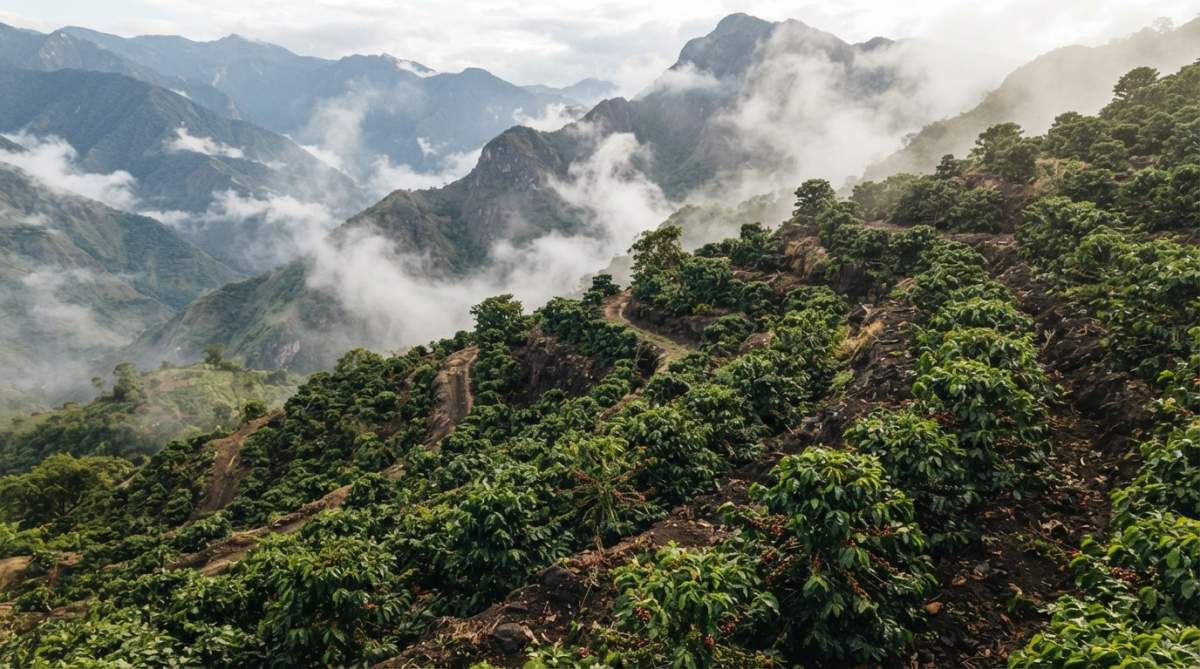
Terroir, soil, elevation, rainfall, temperature, and sunlight, determines coffee flavor. A bean at 1,700 meters in Ethiopian highlands tastes completely different from one at 1,200 meters in Bali, even if the same varietal.
The Role of Elevation and Soil
Higher altitudes slow cherry ripening, allowing more sugars and complex compounds to develop. High-altitude coffees like Ethiopia's Sidama (1,700-1,900m) and Colombia's highlands (1,300-1,500m) develop pronounced sweetness and acidity.
Single Origin Favorites Sample Pack →
Lower elevation coffees ripen faster, developing heavier body and chocolate notes. Bali's volcanic regions (1,200-1,600m) produce syrupy, dark-chocolate profiles.
Volcanic loam, rich in minerals, produces coffees with distinctive minerality and body. These minerals end up in the bean and influence taste.
Processing Methods and Flavor Complexity
Processing method dramatically reshapes flavor. Washed, natural, and honey processes each produce distinct taste profiles from the same bean.
Washed process removes fruit before drying, creating clean, bright cups with pronounced acidity.
Coffee Varietals and Their Distinct Tasting Notes
A coffee varietal is the plant variety (like apple varieties). Bourbon, Typica, Castillo, and heirloom cultivars each bring distinct sensory signatures.
How to Store Fresh Roasted Coffee for Maximum Flavor
Fresh roasted coffee degrades quickly with air, light, and moisture exposure. Proper storage is essential.
Traceability and Ethical Sourcing: What You're Really Tasting
Clear traceability lets you identify the farm, farmer, altitude, processing method, and harvest date. This transparency matters for ethics and flavor.
Brewing Single Origin Coffee Right
Single origin demands intentional brewing to highlight specific flavor compounds. A natural-process Ethiopian needs different parameters than a washed Colombian.
Understanding Extraction and Single Origin Flavor Profiles
Extraction, soluble material pulled from grounds, bridges bean characteristics and taste. The sweet spot is 18-22% extraction: roughly 25-30 seconds for pour-over, 4 minutes for French press, 25-30 seconds for espresso.
Origin-Specific Brewing Adjustments
Ethiopian Natural or Honey-Process: Brew at 195-200°F with a 1:17 ratio. If muddy or over-sweet, reduce contact time or use coarser grind. If thin or sour, raise temperature or use finer grind. Cold brew (12-18 hours) brings out fruity notes and softens acidity.

Grind Size as a Troubleshooting Tool
Grind size is your most accessible lever for adjusting flavor without changing equipment. If a single origin doesn't taste as expected:
- Tastes sour or thin: Use a finer grind. Smaller particles increase surface area and extraction. This works especially well for under-extracted washed coffees or high-altitude origins where you want more complexity.
- Tastes bitter or harsh: Use a coarser grind. Larger particles reduce surface area and slow extraction. This is your fix for over-extracted naturals or coffees brewed with water that's too hot.
- Tastes flat or one-dimensional: Try a medium-fine grind with slightly hotter water. You may be under-extracting subtle notes that need more contact time to develop.
Water Quality and Temperature Precision
Water quality matters more than most people realize. Mineral content affects extraction and flavor. Water that's too soft (distilled or reverse-osmosis filtered) can taste flat; water that's too hard can taste chalky or muted. Filtered tap water or bottled spring water with 50-150 parts per million of dissolved minerals is ideal for most single origins.
Matching Brewing Method to Origin Character
Different brewing methods highlight different aspects of a single origin's flavor:
- Pour-over (Chemex, V60, Melitta): Best for washed coffees and high-altitude origins where you want to emphasize brightness, acidity, and clean flavor. The paper filter removes oils and sediment, letting delicate notes shine.
- French press: Best for natural-process coffees and lower-altitude origins where you want full body and richness. The metal mesh lets oils through, creating a heavier mouthfeel that complements fruity or earthy notes.
- Espresso: Best for balanced, medium-body origins like Colombian washed or Brazilian naturals. The pressure and heat extract quickly, concentrating flavors and creating crema.
- Cold brew: Best for natural-process and honey-process coffees where you want to soften acidity and emphasize sweetness. The long, cool steep brings out fruit and chocolate notes without bitterness.
Frequently Asked Questions
What does 'single origin' actually mean on a coffee label?
Single origin coffee comes from one specific geographic region, farm, or micro-lot, rather than being blended from beans grown in multiple countries. This traceability means you know exactly where your coffee was grown, at what altitude, and how it was processed. Single origin coffees highlight the unique characteristics of that region's terroir, the combination of soil, climate, and elevation that shapes the bean's flavor profile. A single origin coffee might be labeled by country (Ethiopia), region (Sidama Zone), or even the specific farm. This specificity is what allows you to taste the distinct tasting notes and flavor complexity that region is known for.
Is single origin coffee objectively better than blends?
Single origin and blends serve different purposes, so 'better' depends on what you value. Single origin coffees showcase the unique sensory experience of a specific place, the brightness of an Ethiopian natural process, the chocolate notes of a Bali Blue. Blends are designed to create consistency and balance flavors across seasons and crops. Single origins offer more flavor complexity and traceability, making them ideal if you want to explore terroir and taste how elevation and processing methods affect your cup. Blends offer predictability and often smoother, more balanced profiles. Coffee lovers who prioritize discovering distinct tasting notes and supporting specific farming communities typically prefer single origins.
How does altitude and processing method affect the taste of single origin coffee?
Altitude dramatically influences flavor development. Higher elevation slows bean maturation, allowing more sugars and acids to develop, creating brighter, more complex tasting notes. A coffee grown at 1,700-1,900 meters typically has more acidity and fruit-forward flavors than one grown at 1,200-1,600 meters. Processing method is equally important: washed process coffees are clean and bright, natural process coffees are fruity and syrupy with more body, and honey process coffees balance both. For example, Ethiopia Natural processed at high altitude develops milk chocolate and ripe fruit notes, while a washed Colombian at similar elevation emphasizes dried orange and berry brightness. These variables work together to create the flavor complexity that makes single origin coffee distinctive.
How long does roasted-to-order coffee stay fresh after I receive it?
Roasted-to-order coffee is freshest within 2-4 weeks of the roast date, though it remains flavorful for up to 6-8 weeks if stored properly. The first 2-3 days after roasting, CO2 is still off-gassing, which can make brewing less predictable. Days 4-14 are peak flavor, this is the ideal window for tasting the full sensory experience and complexity of tasting notes. After 4 weeks, the beans begin losing brightness and acidity, though they're still drinkable. Store in an airtight container away from heat, light, and moisture to extend freshness. Whole beans stay fresh longer than ground coffee, which oxidizes faster. Check the roast date on your bag to know exactly when your coffee was roasted and plan your brewing accordingly.